Knee Pain
Knee Pain & Sports Injury Physiotherapy in Science City, Ahmedabad
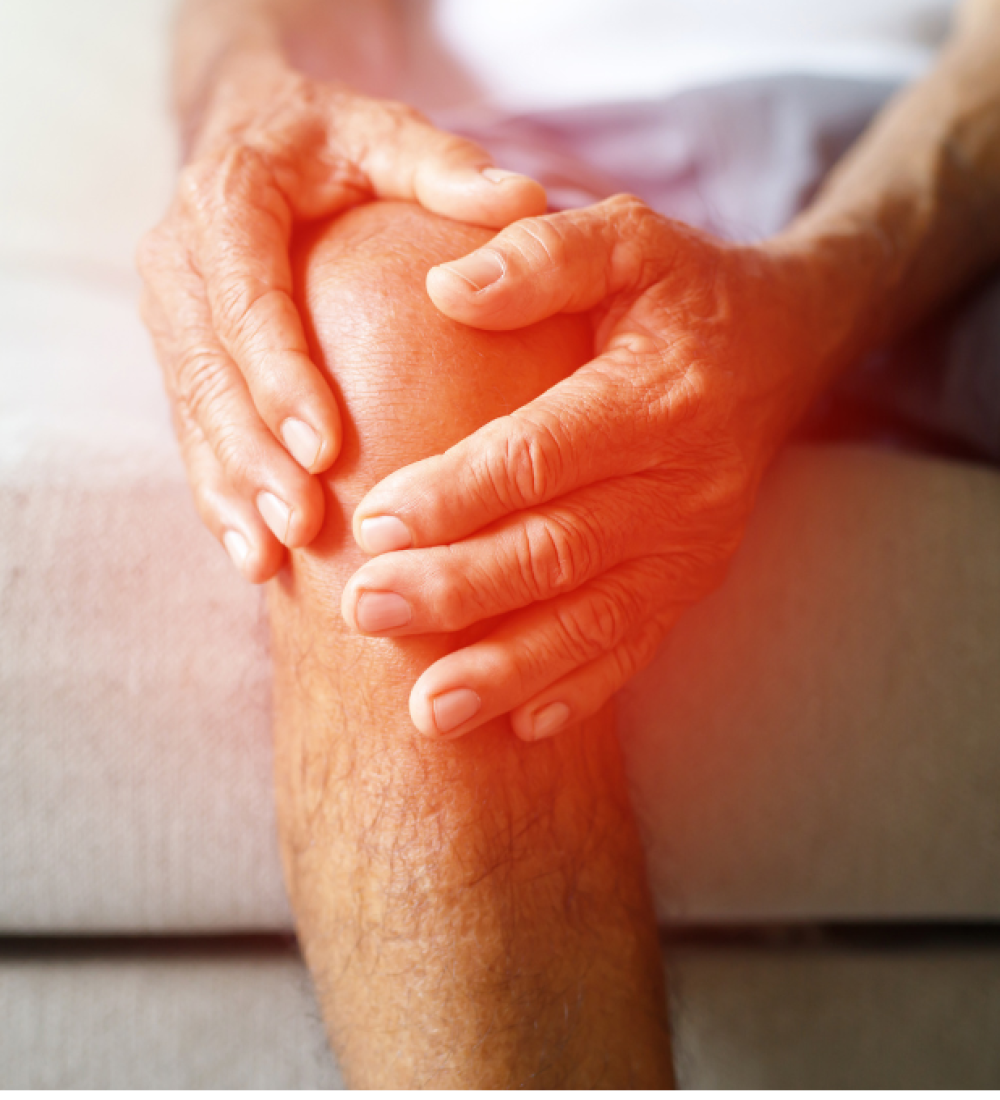
Knee pain stopping you from squatting, running, or walking down the stairs? The problem is rarely just the knee.
The knee is one of the most commonly injured joints in the body — but it is also one of the most mismanaged. Most people are told to rest, avoid squats, or take anti-inflammatories. The pain settles temporarily. Then it comes back the moment they return to activity, because nothing that was driving the problem has changed.
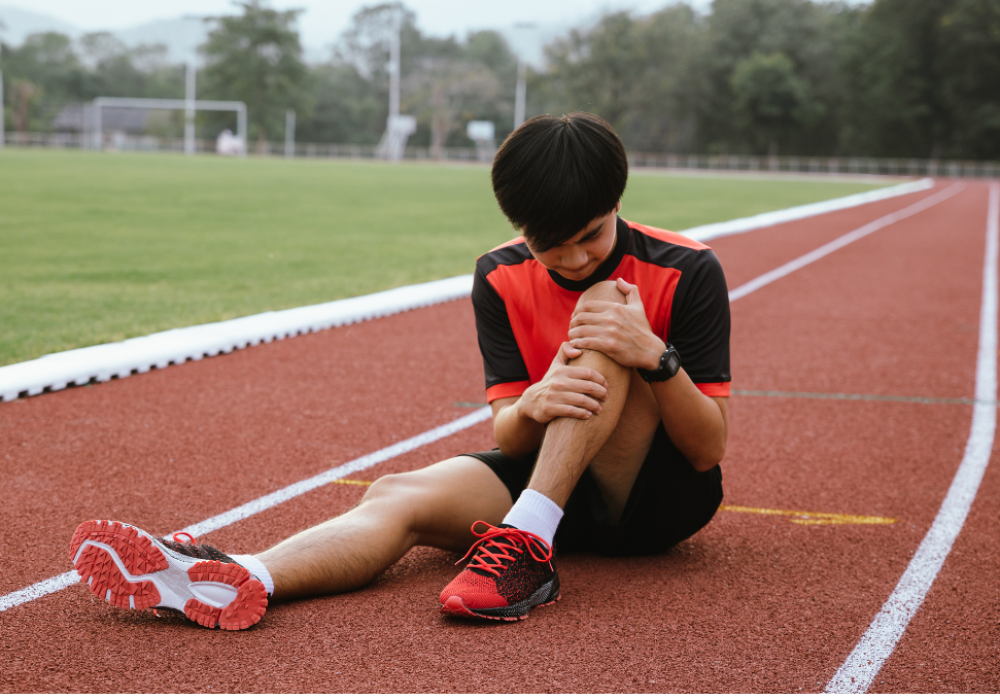
For athletes — wrestlers, cricketers, runners, gym-goers — a knee problem affects training, performance, and confidence in equal measure. For active adults and those with long-standing knee pain, it quietly removes the activities that matter most, one by one.
At MoveSync, we treat knee pain as a kinetic chain problem — not a local joint problem. The ankle, the hip, and the knee work as a unit. What you feel at the knee is frequently a consequence of what is happening above or below it. MoveSync is led by Dr. Mansi Shah, MPT (Orthopaedics & Sports) with a Fellowship in Osteopathy and 14+ years of clinical experience — ensuring every patient receives the same standard of care.
Highly rated on Google · Science City, Ahmedabad
14+ years in orthopaedic and sports physiotherapy
MPT + Fellowship in Osteopathy · Evidence-based treatment
Trusted by athletes, gym-goers, active adults, and post-surgical patients
What Patients Say
I am a national wrestling player. I had a knee injury one week before my senior state competition. With the help of the team at MoveSync I received great treatment and was able to compete and secured a gold medal. I will refer everyone to get treatment here.
I have a complex knee case — ACL injury for the second time plus a meniscus injury. The team gave me constant personal attention, carefully tailoring every exercise to my injury, pain, and daily condition. They always explain why pain happens and why certain exercises are necessary even when there is discomfort, which helped me trust the process. Even after moving abroad, they continue to support me through FaceTime sessions. Highly recommended for anyone needing individual-focused physiotherapy.

Common Knee Conditions We Treat
If you are dealing with any of the following, you are in the right place.
- Ligament Injuries: ACL, MCL, and LCL sprains and tears — both conservative management and post-surgical reconstruction rehab
- Meniscus Injuries: Tears causing catching, locking, or swelling — including cases where conservative rehab is used to avoid surgery
- Patellofemoral Pain (Runner's Knee): Pain at the front of the knee during stairs, sitting, squatting, or running
- Tendon Injuries: Patellar tendinopathy (jumper's knee), quadriceps tendinopathy, and IT band syndrome
- Knee Osteoarthritis: Progressive strengthening and load management to improve function and delay surgical intervention
- Young Athlete Knee: Osgood-Schlatter disease, Sinding-Larsen-Johansson syndrome, and tendinitis in cricketers, badminton players, and swimmers aged 12–17
- Muscle Injuries: Hamstring strains, quadriceps muscle pulls, adductor and groin injuries
- Post-Surgical Rehab: ACL reconstruction, meniscus repair, and total knee replacement — both early post-op and late-stage return to sport
- Amputation Rehab: Above and below knee amputation rehabilitation for functional independence and mobility
Signs You May Benefit From Treatment
You do not need a scan or referral to reach out. If you recognise any of these, a physiotherapy assessment can give you clarity.
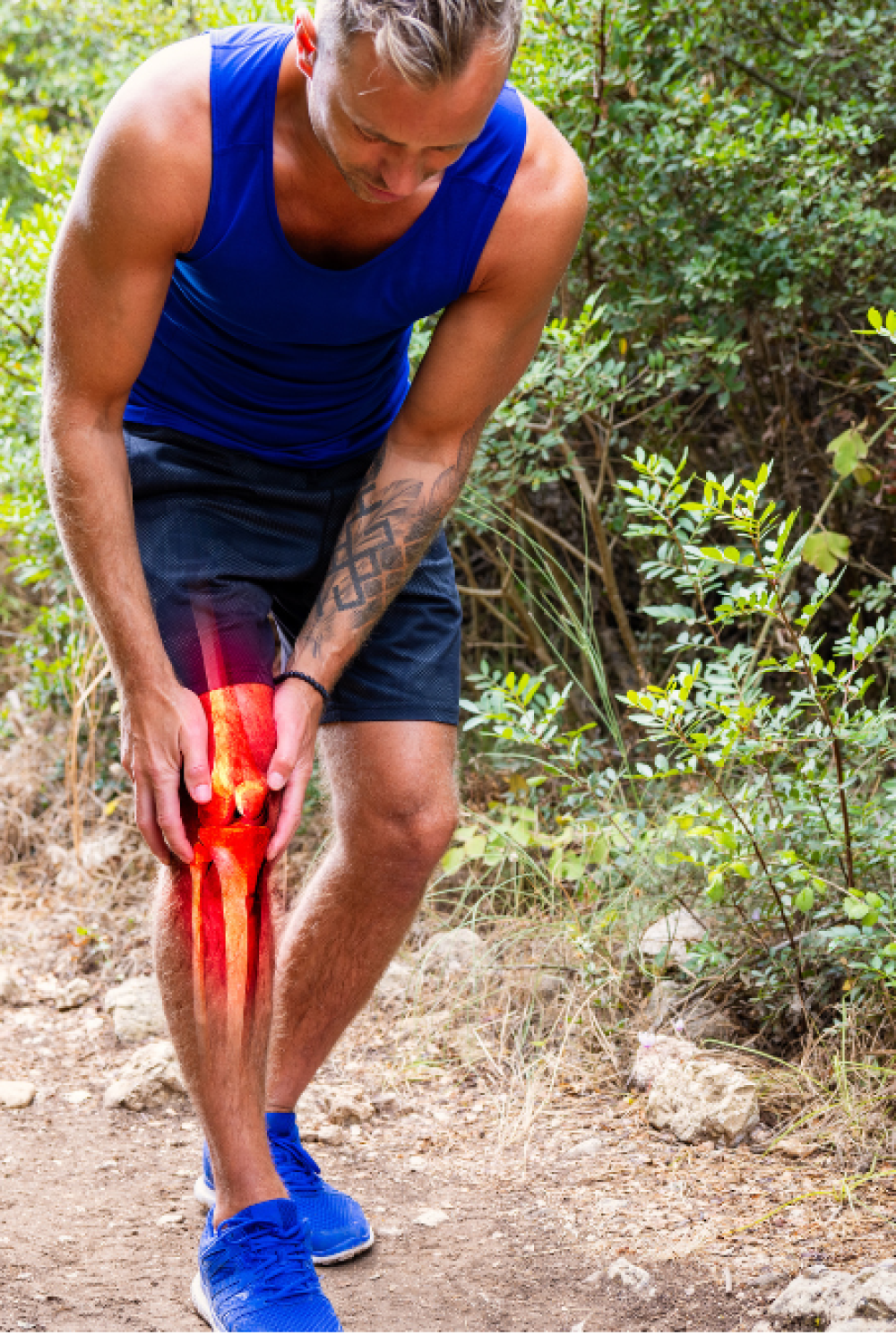
- Pain at the front, inside, or outside of the knee during or after running, squatting, or stairs
- Swelling, catching, or a locking sensation in the knee with movement
- Knee that feels unstable, gives way, or does not feel trustworthy on uneven ground
- Morning stiffness that eases with movement but returns after long periods of sitting or standing
- Knee pain in a young athlete that worsens during or after training — particularly at the front of the knee below the kneecap
- Pain that settled after rest but returns immediately when activity resumes — a cycle that keeps repeating
Why Knee Pain Keeps Returning
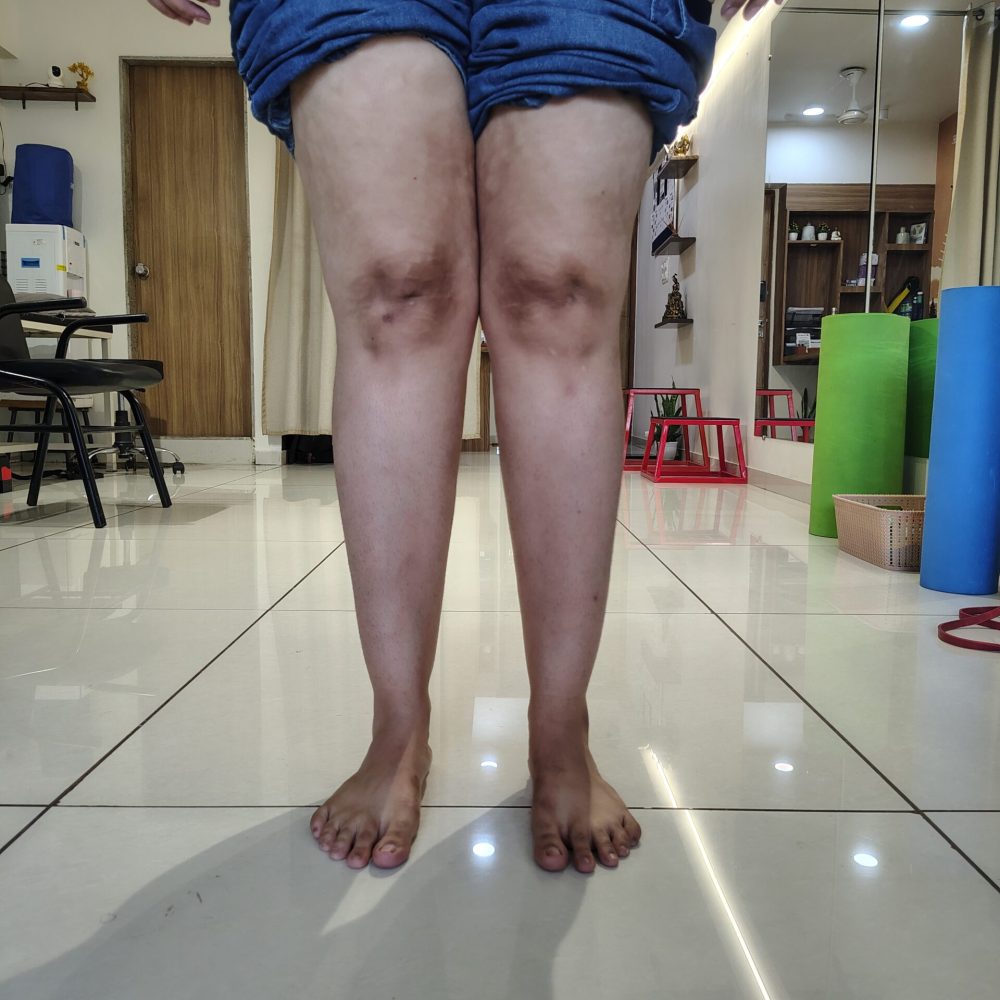
The knee is a hinge joint. It is designed to flex and extend — not to rotate, twist, or absorb the load that belongs to the hip and ankle. When those joints are not doing their job correctly, the knee compensates and gets overloaded.
A stiff ankle forces the knee to rotate inward during walking, running, and squatting — a pattern called valgus collapse that gradually overloads the medial structures, the patellofemoral joint, and the ACL. A weak hip — particularly the glutes and external rotators — creates exactly the same knee-in pattern from above. The knee ends up paying for dysfunction it did not cause.
For knee osteoarthritis, flat foot, and chronic tendon pain, visceral and fascial connections also contribute. Restrictions in the caecum, hip flexor fascia, and iliotibial tract lines influence how load travels through the knee with every step — which is why treating the knee alone gives incomplete results.
Pain management gets you comfortable. Correcting the mechanics above and below the knee is what prevents the next episode.
How MoveSync Treats Knee Pain
Treatment at MoveSync follows a structured process — from root cause assessment through to strength and prevention.
Your physiotherapist will assess the knee joint, hip strength and control, ankle mobility, movement mechanics, and neural tension — building a plan specific to your condition, your activity level, and your return-to-sport or daily life goals.
Reduce pain and restore joint function
Joint mobilisation for restricted knee, hip, or ankle mechanics contributing to knee overload. Dry needling to release trigger points in the quadriceps, hamstrings, IT band, and calf that are maintaining pain and altering movement patterns. IASTM for tendon and fascial restrictions around the patella, IT band, and popliteal structures. Kinesio taping for patellar tracking support and proprioceptive feedback during early rehabilitation.
Correct the kinetic chain
Targeted hip stability and glute activation work to remove the valgus load from the knee. Ankle mobility work and foot mechanics correction where flat foot or hyperpronation is driving the knee-in pattern — a direct cause of patellofemoral pain, IT band syndrome, and medial knee overload. Visceral manipulation where caecal or fascial restrictions are influencing lower limb mechanics and knee load distribution.
Build strength and neuromuscular control
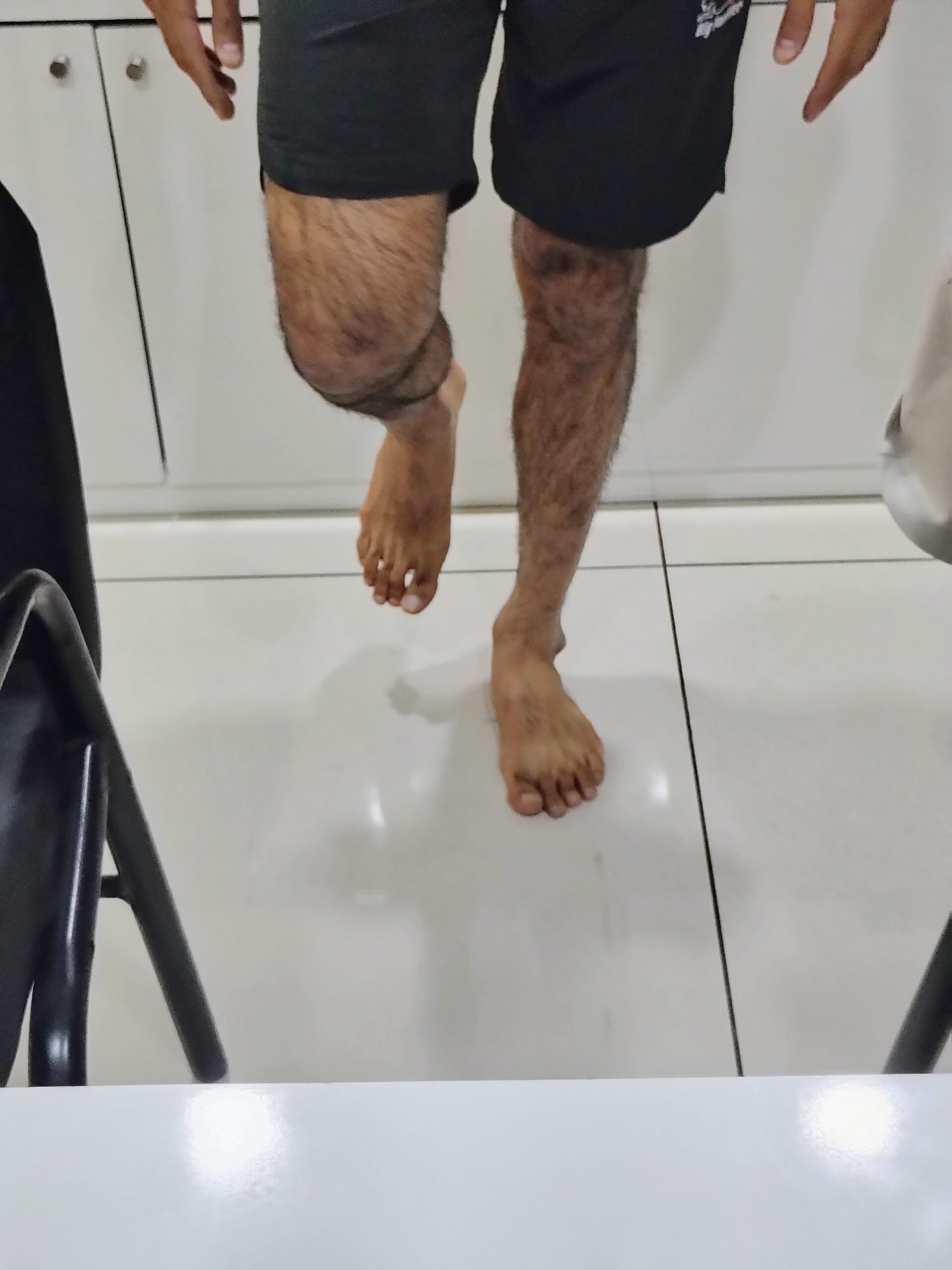
Progressive loading using dumbbells, kettlebells, and resistance bands — with objective strength benchmarks at each stage rather than time-based progression. Late-stage rehab focused on strength and neuromuscular conditioning — because sport is never played with a single muscle or a single joint. Balance and coordination training to prepare for the unpredictability of on-field conditions. For athletes, live movement assessment in clinic — single-leg squat mechanics, landing patterns, and sport-specific loading corrected in real time.
Return to sport and prevent recurrence
A full return-to-sport testing battery — single-leg hop testing, landing mechanics, agility, and strength symmetry (ensuring the injured limb is within 90% of the healthy side) before clearance for full training and competition. Load management and training modification for young athletes with Osgood-Schlatter or tendinitis — keeping them on the field safely while the tissue adapts. For post-surgical patients, a phase-wise return-to-sport programme that goes beyond pain reduction to restore the power, coordination, and confidence needed for competition.
Treatment may include joint mobilisation, dry needling, IASTM, kinesio taping, visceral manipulation, osteopathic MET, progressive loading, neuromuscular conditioning, and sport-specific functional rehab — structured around your condition, activity level, and recovery goals.
What Happens at Your First Session
Your first session is 45–60 minutes. A full history is taken — the nature of your knee pain, how it started, what aggravates it, your sport or training background, any surgical history, and what you want to return to.
Your physiotherapist will assess the knee joint, hip strength, ankle mobility, and movement mechanics. If you have brought a scan report, it will be reviewed in the context of your clinical presentation. If you are a young athlete, training load, growth stage, and nutritional context will also be discussed.
You will leave with a clear explanation of what is driving your pain and a realistic plan for what comes next. There is no pressure to commit to a course of sessions at your first visit.
Who Comes to MoveSync for Knee Pain
We regularly work with:
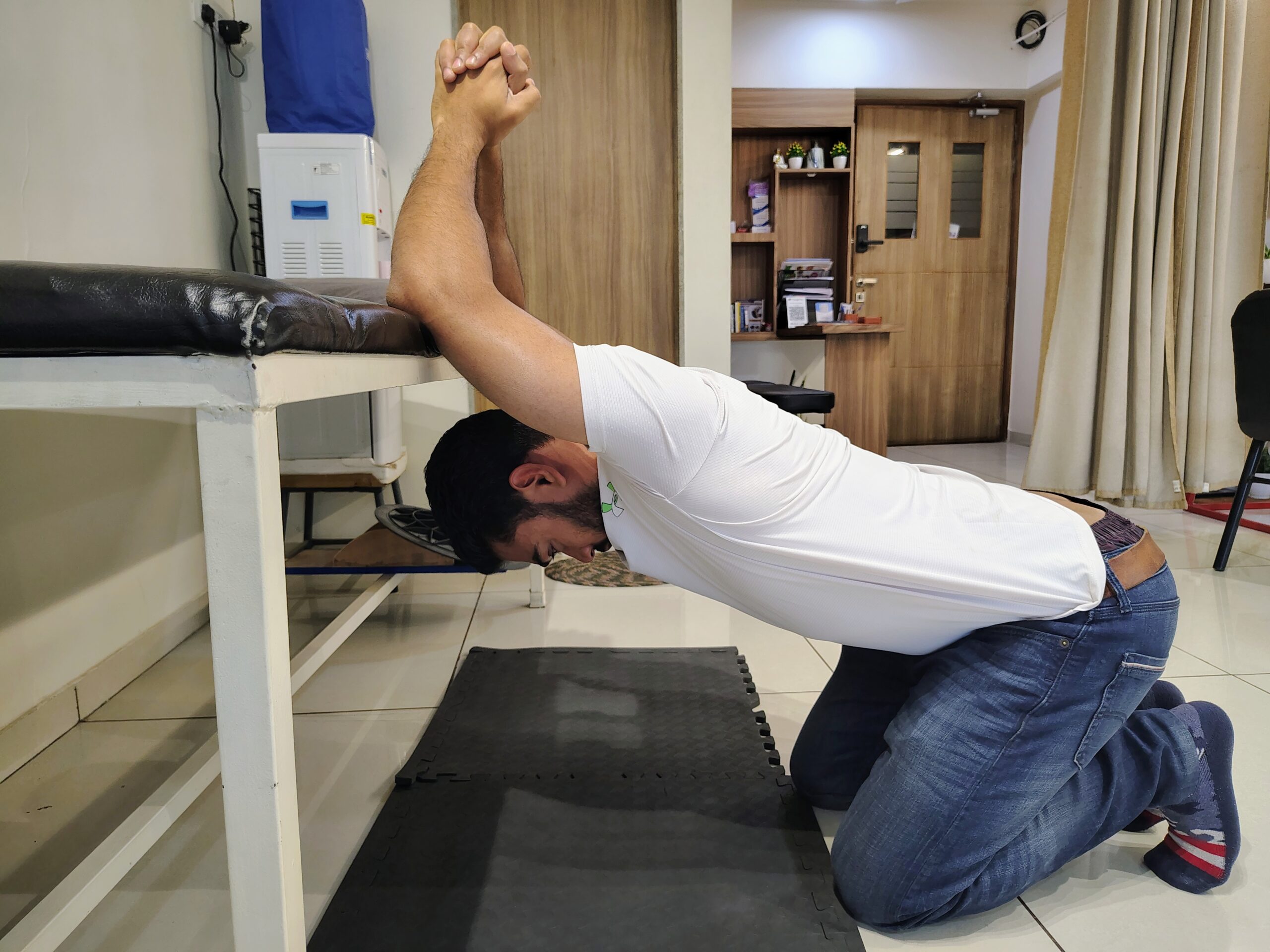
- Athletes and competitive players — wrestlers, cricketers, runners, gym-goers — managing acute injuries or chronic overuse that is affecting performance
- Young athletes aged 12–17 with Osgood-Schlatter, patellar tendinitis, or knee pain driven by training load and rapid growth
- Adults with knee osteoarthritis looking for a structured strengthening programme that improves function and delays the need for surgery
- Post-ACL and post-meniscus surgery patients — both early post-op and those returning months or years later with persistent movement deficits or wanting to return to sport
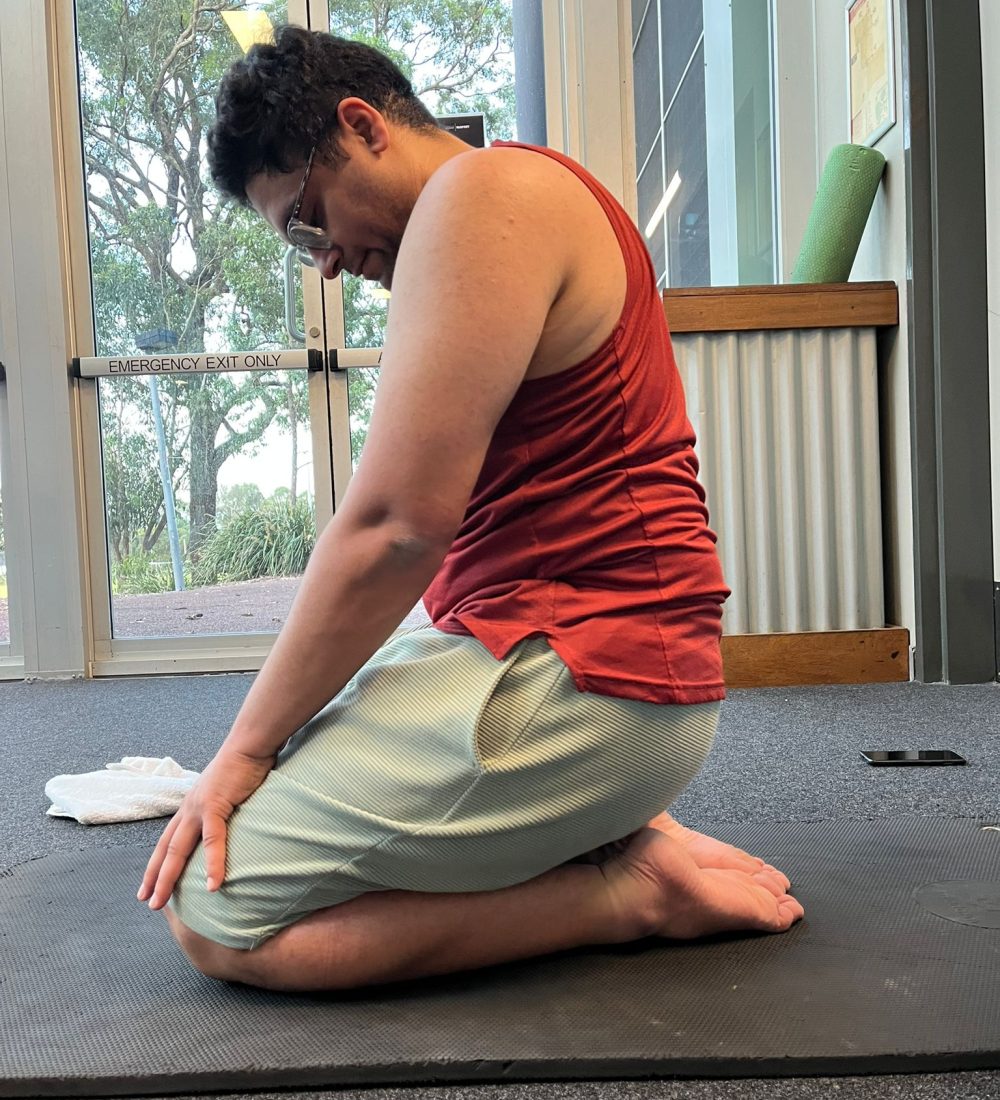
- People whose knee pain has been attributed to flat foot, hip weakness, or poor movement mechanics — and who have not found lasting relief from local knee treatment alone
- Active adults in Science City, Sola, Bodakdev, and Thaltej who want a root-cause, sport-aware approach
If your knee pain is related to a sports injury, training load, or post-surgical recovery, our Sports Rehab programme may be the right starting point.
Why Patients Choose MoveSync
Knee rehabilitation at MoveSync goes further than most clinics in two specific ways. First, the kinetic chain assessment — hip mechanics, ankle mobility, foot posture, and fascial lines — is always part of the picture. Knee pain caused by flat foot, valgus mechanics, or hip weakness does not resolve with local knee treatment alone, and that distinction is made at the assessment, not discovered months into rehab. Second, the late-stage rehab philosophy: getting out of pain is the start, not the finish. Strength, neuromuscular conditioning, balance under load, and sport-specific movement patterns are what determine whether the injury comes back. Every patient is discharged against their actual end goal — not a generic pain score.
- Full lower limb kinetic chain assessment — hip, ankle, and fascial system as drivers of knee pain
- Late-stage neuromuscular and sport-specific conditioning — built around your actual sport, not generic protocols
- Return-to-sport testing with objective strength symmetry benchmarks before full clearance
- Treatment covers acute injuries, chronic pain, OA, young athlete overuse, and post-surgical rehab
Frequently Asked Questions
Can physiotherapy help me avoid knee surgery for an ACL or meniscus injury?
Why does my knee hurt more going down the stairs than up?
Do you treat young athletes with growth-related knee pain like Osgood-Schlatter?
How do I know when I am actually ready to return to running or sport?
What happens at my first appointment at MoveSync?
Take the Next Step
If knee pain is stopping you from training, competing, or simply moving without thinking about it — you do not have to wait it out or work around it indefinitely.
Treating other areas too? Browse all conditions we help with at MoveSync