Diastasis Recti & Post-Pregnancy Rehab
Diastasis Recti & Post-Pregnancy Rehab in Science City, Ahmedabad
Cleared at 6 weeks but still not feeling right? Your recovery may have only just begun.
Pregnancy and childbirth change your body in ways that a 6-week check-up rarely addresses. Many women are told they are fine to resume normal activity — and then spend months wondering why their core feels disconnected, their back aches constantly, or their abdomen still doesn't look or feel like their own.
Whether you delivered recently or years ago, whether your concern is a persistent abdominal gap, C-section scar tightness, pelvic floor weakness, or back and pelvic pain that has never fully resolved — these are not things you simply have to live with.
At MoveSync, we treat the core, pelvic floor, and musculoskeletal system as a complete unit — helping you rebuild functional strength from the ground up. MoveSync is led by Dr. Mansi Shah, MPT (Orthopaedics & Sports), certified in Pelvic Floor Rehabilitation, with 14+ years of clinical experience — ensuring every patient receives the same standard of care.
Highly rated on Google · Science City, Ahmedabad
14+ years in orthopaedic and sports physiotherapy
MPT + Certified Pelvic Floor Rehabilitation · Evidence-based care
Safe, private, and clinically structured postnatal rehab
What Patients Say
Dr. Mansi Shah Mehta is very talented and trustworthy. I had severe back pain and consulted her for that, and within 5–6 days she cured me — it was like a miracle. She also taught me how to prevent recurrences. Totally worth using the words "healing hands."

What We Help With
If you are dealing with any of the following — recently postpartum or years later — you are in the right place.
- Diastasis Recti: Abdominal separation causing a visible gap, doming, or a persistent abdominal "pooch" that does not respond to regular exercise
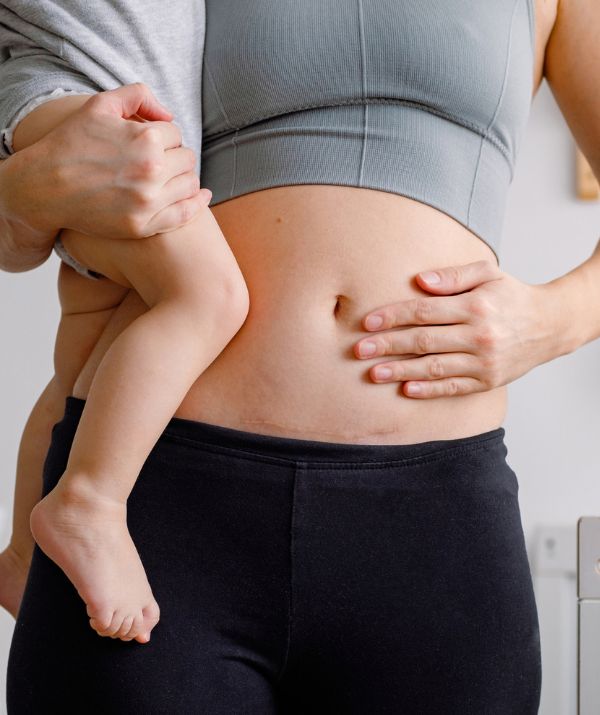
- C-Section Scar Issues: Scar tightness, pulling sensations, numbness, or chronic lower back and hip pain related to scar tissue adhesion
- Pelvic Floor Weakness: Heaviness, mild leakage, or reduced core control — addressed through non-invasive, external techniques
- Post-Pregnancy Back & Pelvic Pain: SI joint instability, tailbone pain, lower back pain, and mid-back stiffness from prolonged feeding or carrying positions
- Neck Pain During or After Pregnancy: Cervical pain and facet joint stiffness aggravated by postural changes during and after pregnancy
- Return to Exercise: Structured, progressive return to running, HIIT, gym training, or sport — starting from where your body actually is

Signs You May Benefit From Treatment

You do not need a referral or a formal diagnosis. If you recognise any of these, a physiotherapy assessment can give you clarity.
- Your core feels "empty," disconnected, or like it is not switching on properly during movement
- You notice a gap, ridge, or doming along your midline when you sit up or exert effort
- Your C-section scar feels tight, numb, or seems to be pulling at your lower abdomen or back
- Lower back or pelvic pain that started during pregnancy and has not fully resolved
- You feel a sense of heaviness or reduced control in the pelvic area during exercise or daily activity
- You have been doing crunches or core exercises but your abdomen is not responding — or feels worse
Why Postnatal Recovery Often Stalls
The 6-week clearance is a general health check — not a functional assessment of your core, pelvic floor, or musculoskeletal system. It tells you that healing has begun, not that recovery is complete.
For women who had a C-section — which accounts for the majority of patients we see — scar tissue is a frequently missed driver of ongoing problems. A scar that adheres to the underlying fascial and muscle layers quietly inhibits core muscle activation and contributes to back pain, hip tightness, and poor abdominal tone — long after the wound itself has healed.
Deep abdominal muscles also do not automatically switch back on after pregnancy. Without targeted reactivation, women often compensate with surface muscles and incorrect movement patterns — which is why standard exercise does not resolve DR or core weakness, and can sometimes make it worse.
The only way to understand where your recovery actually stands is a proper hands-on clinical assessment.
Our approach
We do not progress you just because a few weeks have passed. We progress you when your knee shows the right signs better strength, better control, better movement quality, and better tolerance to load.
That is what criteria-based ACL rehab means. It protects the graft, reduces false confidence, and gives you a clearer path back to activity and sport.
Why most ACL recoveries feel incomplete
A lot of people expect the surgery to be the hard part. In reality, surgery is only the beginning. The real work is rebuilding quadriceps strength, restoring control, improving single-leg loading, and preparing the knee for the demands of real life and sport.
That is why a knee can feel “better” but still not feel ready. Pain may settle and walking may improve, yet strength deficits, poor landing mechanics, hesitation, and side-to-side asymmetry can still remain.
How MoveSync Treats Post-Pregnancy Conditions
Treatment at MoveSync follows a structured process — from root cause assessment through to strength and prevention.
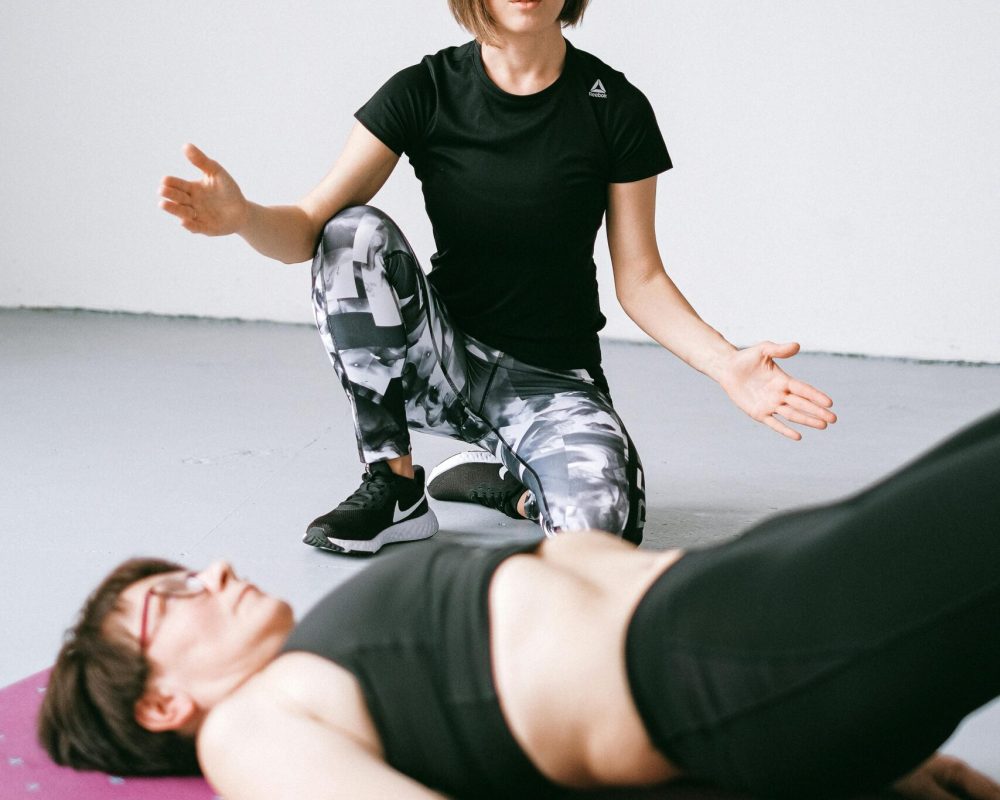
Your physiotherapist will assess your abdominal separation, scar tissue, pelvic floor function, and movement patterns — building a plan specific to where you are in your recovery and what you want to return to.
Restore connection and reduce pain
C-section scar mobilisation [future link: /treatment-approach/] to release adhesions between the scar and the underlying fascial and muscle layers — often the first and most important step for women who delivered by caesarean. Manual therapy for SI joint, tailbone, and lower back pain that has persisted since delivery.
Reactivate the deep system
Pressure biofeedback assessment to measure deep abdominal muscle activation in real time — giving you objective data on whether your transverse abdominis and pelvic floor are actually switching on, not just whether you can feel them. Tactile cueing and breathing mechanics to restore the brain-muscle connection that pregnancy disrupts.
Build functional strength
Progressive loading using TRX, resistance bands, and Pilates-based movements — transitioning from floor-based activation to standing, functional strength that mirrors real-life demands. Exercises are structured around your current capacity, your goals, and whether you are breastfeeding or managing sleep deprivation alongside rehab.
Return to full activity
A graded return-to-exercise plan — running, HIIT, gym training, or sport — with clear benchmarks for each stage. We do not clear you for activity based on time alone. We clear you based on what your body can actually do.
Treatment may include scar mobilisation, pressure biofeedback, joint mobilisation, soft tissue mobilisation, TRX-based functional training, and progressive loading — structured around your symptoms, stage of recovery, and personal goals.
What Happens at Your First Session
Your first session is 45–60 minutes and takes place in a private, comfortable setting. A full history is taken — your delivery type, any complications, current symptoms, and what you want to get back to.
Your physiotherapist will assess your abdominal separation, C-section scar if applicable, core activation patterns, and any musculoskeletal pain areas. You will leave with a clear picture of where your recovery stands and a realistic, stage-by-stage plan.
There is no pressure to commit to a course of sessions at your first visit. Many women find that even the first session gives them more clarity about their body than anything they received at their postnatal check-up.

Who Comes to MoveSync for Post-Pregnancy Rehab
We regularly work with:
- Women in the early postpartum period (0–6 months) looking for a structured, safe recovery plan rather than generic advice
- Mothers months or years postpartum who are still dealing with unresolved core weakness, back pain, or scar tightness
- Women who have tried postnatal yoga or general exercise but have not seen improvement in their DR or core function
- Those wanting to return to running, gym training, or sport with a proper clinical clearance — not just a time-based one
- Active women in Science City, Sola, Bodakdev, and Thaltej who want evidence-based postnatal care
If your post-pregnancy symptoms include chronic back pain, pelvic instability, or postural problems that have persisted beyond the early postpartum period, our Chronic Pain Rehab programme may also be relevant.
Why Patients Choose MoveSync
Postnatal rehab requires a specific clinical skillset that sits at the intersection of musculoskeletal physiotherapy, sports rehabilitation, and pelvic health. At MoveSync, the combination of an MPT in Orthopaedics and Sports, a Pelvic Floor Rehabilitation certification, and three years of routine pressure biofeedback use means assessment and treatment go significantly beyond what a general physiotherapy clinic or a postnatal yoga class can offer. For C-section recoveries especially — which make up the majority of patients seen here — scar mobilisation as a first-line treatment is a clinical priority that most practitioners overlook entirely.
- Certified Pelvic Floor Rehabilitation — non-invasive, external approach suitable for all postpartum stages
- Pressure biofeedback for objective, real-time core activation assessment
- C-section scar mobilisation as a clinical priority — not an afterthought
- Progressive functional strength programme using TRX and resistance-based loading
Frequently Asked Questions
Is it too late to treat diastasis recti if my child is already a few years old?
What does non-invasive pelvic floor rehab involve?
Why is C-section scar mobilisation important even years later?
Can I start rehab while I am still breastfeeding?
What happens at my first appointment at MoveSync?What happens at my first appointment at MoveSync?
Take the Next Step
Your body has done something extraordinary. The recovery it deserves is specific, clinical, and built around where you actually are — not a generic programme or a six-week clearance that leaves more questions than answers.
Treating other areas too? Browse all conditions we help with at MoveSync