Shoulder Pain
Shoulder Pain & Rotator Cuff Physiotherapy in Science City, Ahmedabad
That sharp catch when you reach up, the ache that wakes you at 2am — your shoulder is telling you something isn't right.
Shoulder pain is uniquely limiting because the shoulder is involved in almost every upper body movement. A sharp catch when reaching overhead, pain that peaks at night and disrupts your sleep, weakness when pressing or throwing — these are not problems that rest alone resolves. In most cases, rest gives temporary relief and the pain returns the moment you go back to activity.
For athletes — cricketers, swimmers, gym-goers, and contact sport players — a shoulder problem can derail an entire season. For desk workers and active adults, it quietly removes the things you enjoy most from your daily life.
At MoveSync, we treat the shoulder as part of a complete mechanical system — assessing the joint, the rotator cuff, the shoulder blade, the thoracic spine, the neck, and the fascial connections above and below. MoveSync is led by Dr. Mansi Shah, MPT (Orthopaedics & Sports) with a Fellowship in Osteopathy and 14+ years of clinical experience — ensuring every patient receives the same standard of care.

Highly rated on Google · Science City, Ahmedabad
14+ years in orthopaedic and sports physiotherapy
MPT + Fellowship in Osteopathy · Evidence-based treatment
Trusted by athletes, gym-goers, desk workers, and active adults
What Patients Say
I came here to get treatment for a frozen shoulder problem that happened due to mishandling of baggage during travel. I was almost fully recovered after about 25 sessions but continued for about 40. I am extremely happy with the treatment received. The MoveSync team looked after me throughout — dedicated, sincere, and always with a smile. I would be pleased to recommend MoveSync to anyone who requires physiotherapy.
I had treatment for spine, shoulder, and neck pain. The approach is purely personal — it changes from patient to patient according to the problem. I attended for almost one and a half months and was trained through my exercises one by one until I could do them myself. Given attention and proper care throughout.
Went to MoveSync with my coach and it was truly a blessing. Patiently attended my queries and gave correct solutions — plus many additional tips to improve my performance in triathlon. I have since completed Ironman 70.3 without further pain or injury. The small tips for multitasking therapy with routine work made all the difference.

Common Shoulder Conditions We Treat
If you are dealing with any of the following, you are in the right place.
- Rotator Cuff Disorders: Tendinopathy, partial tears, and shoulder impingement syndrome
- Frozen Shoulder (Adhesive Capsulitis): Specialist management across the freezing, frozen, and thawing phases
- Shoulder Instability: Post-dislocation rehabilitation and chronic looseness in contact and overhead athletes
- Gym & Overhead Injuries: Pain during bench press, overhead pressing, snatch, or military press — including wrist and shoulder impingement under load
- Young Athlete Shoulder: Bowling shoulder, overhead impingement, and swimming-related rotator cuff overuse in cricketers, swimmers, and badminton players (ages 12–17)
- Scapular Dyskinesis: Poor shoulder blade control contributing to impingement, pain, and reduced power
- Chronic Trapezitis: Upper trapezius and periscapular pain from postural overload or sustained desk and device use
- Post-Surgical Rehab: Recovery after rotator cuff repair, SLAP or labral repair, and Bankart stabilisation
Signs You May Benefit From Treatment

You do not need a scan or referral to reach out. If you recognise any of these, a physiotherapy assessment can give you clarity.
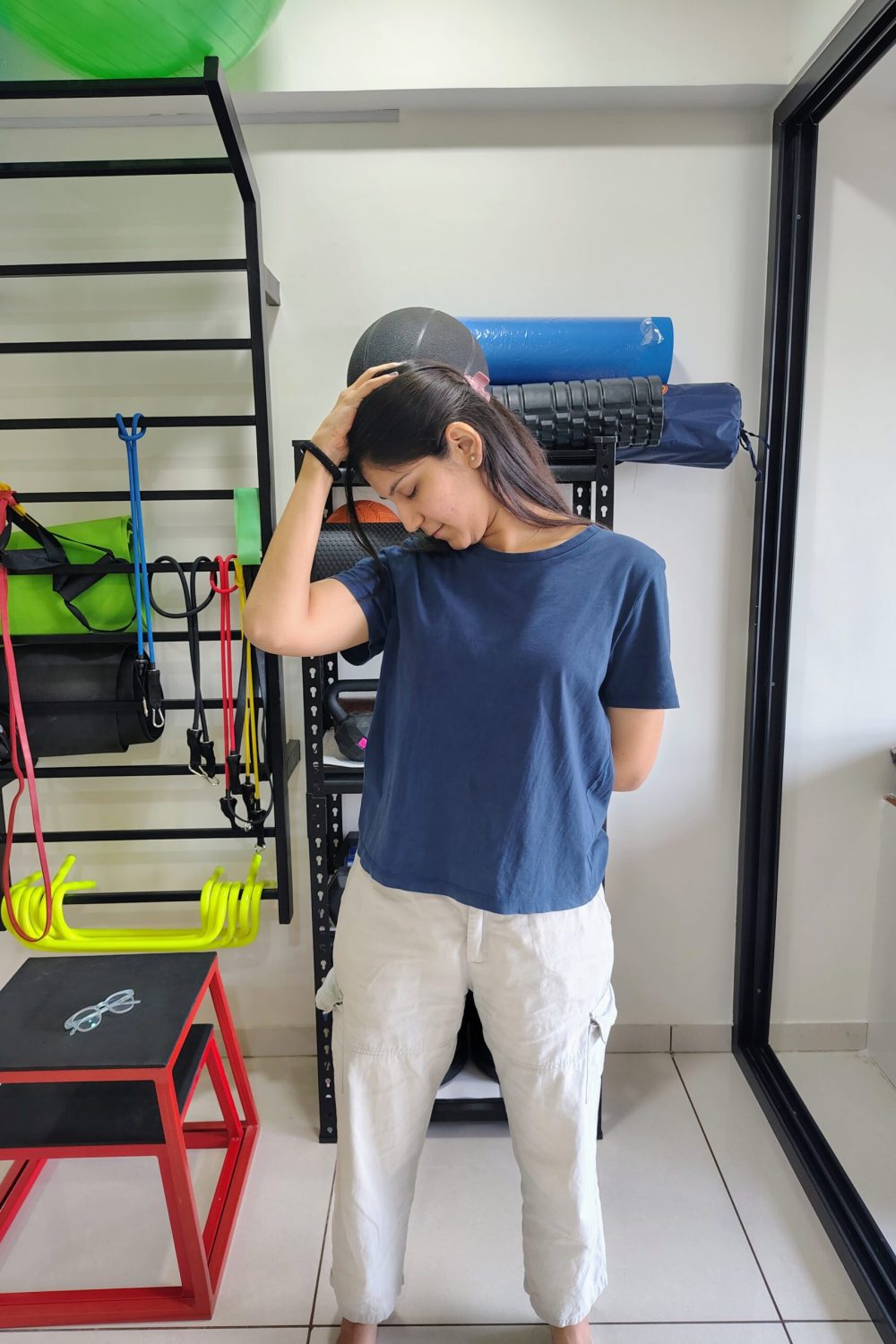
- A sharp catch or pinch when reaching overhead, across your body, or behind your back
- Night pain that wakes you — particularly when lying on the affected shoulder
- Weakness or a feeling of instability when lifting, pressing, or throwing
- Stiffness that has been gradually worsening — particularly with overhead movements or putting on a jacket
- Pain during or after gym sessions that is not settling with rest between workouts
- Shoulder pain in a young cricketer, swimmer, or overhead athlete affecting training or performance
Why Shoulder Pain Keeps Returning
The shoulder is the most mobile joint in the body — which means it depends entirely on the surrounding muscles, fascia, and mechanical chain for its stability. When that system is disrupted, the joint pays the price.
Most shoulder treatment focuses only on the joint and the rotator cuff. But the shoulder blade is the foundation everything else sits on. If the scapula fails to tilt and rotate correctly as the arm goes overhead, the rotator cuff tendons get compressed with every movement. Treat the cuff without correcting the scapular mechanics and the impingement returns.
The thoracic spine matters equally. A stiff mid-back from years of desk work locks the shoulder into a forward-rounded position — a mechanical disadvantage that no amount of rotator cuff exercise will overcome. The cervical spine also influences arm strength through the brachial plexus, which is why some shoulder pain has a component that does not respond to local treatment alone.
For persistent cases, the pericardial, lung apex, and subclavius fascial connections directly influence shoulder mobility in ways that standard rehabilitation never reaches.
The only way to find what is actually driving your pain is a full kinetic chain assessment.
How MoveSync Treats Shoulder Pain
Treatment at MoveSync follows a structured process — from root cause assessment through to strength and prevention.
Your physiotherapist will assess the shoulder joint, rotator cuff, scapular mechanics, thoracic spine, cervical contribution, and fascial system — building a plan specific to your presentation, your sport or activity, and what you want to return to.
Reduce pain and restore joint movement
Joint mobilisation using Mulligan's Mobilisation with Movement to find a pain-free pathway through the shoulder — immediately reducing the protective guarding pattern that limits range. Osteopathic MET to release restricted thoracic and cervical segments locking the shoulder into a compromised position. Dry needling and IASTM to release deep trigger points in the infraspinatus, teres minor, and subscapularis that refer pain down the arm. Dry cupping for periscapular and upper trapezius tension.
Address the fascial system
Stecco fascial manipulation targeting the thoracic inlet, subclavius fascia, and pericardial connections where fascial restrictions are contributing to limited shoulder ROM and chronic periscapular tension — particularly relevant for cases that have not responded to standard treatment.
Correct scapular mechanics and rebuild capacity
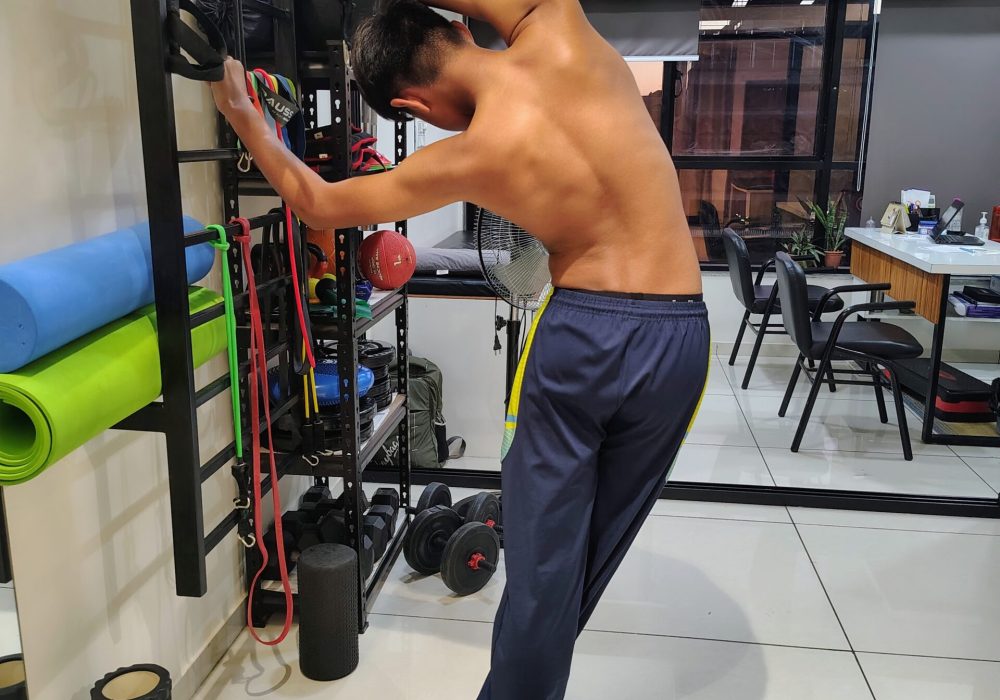
Targeted scapular retraining — ensuring the shoulder blade moves correctly as a foundation before rotator cuff loading begins. Progressive rotator cuff loading using dumbbells and kettlebells with capacity testing at each stage — not generic resistance band exercises. For athletes and gym-goers, live loading assessment where you perform your gym or sport movements in clinic so that the mechanical errors driving your shoulder pain are identified and corrected in real time.
Prevent recurrence
A graded return-to-sport or return-to-gym plan with clear functional benchmarks — symmetrical strength, pain-free overhead range, and stable scapular tracking — before full clearance. For post-surgical patients, a phase-wise protocol in coordination with your surgeon's guidelines. Sleep position advice for patients with significant night pain during the frozen or inflammatory phase.
Treatment may include joint mobilisation, osteopathic MET, dry needling, IASTM, Stecco fascial manipulation, dry cupping, kinesio taping, progressive loading, and sport-specific functional rehab — structured around your symptoms, activity level, and recovery goals.
What Happens at Your First Session
Your first session is 45–60 minutes. A full history is taken — how long the pain has been present, what movements trigger it, whether night pain is involved, your sport or gym background, and what previous treatment has and has not helped.
Your physiotherapist will assess shoulder joint mechanics, rotator cuff strength, scapular control, thoracic mobility, and cervical contribution. If you have brought a scan report, it will be reviewed in the context of your clinical presentation — not in isolation.
You will leave with a clear explanation of what is driving your symptoms and a realistic plan for what comes next. There is no pressure to commit to a course of sessions at your first visit.

Who Comes to MoveSync for Shoulder Pain

We regularly work with:
- Gym-goers and weightlifters managing bench press, overhead, or snatch-related shoulder pain that is not settling between sessions
- Cricketers, swimmers, and badminton players — particularly young athletes aged 12–17 — with bowling shoulder, overhead impingement, or rotator cuff overuse
- Adults with frozen shoulder looking for a structured, phase-specific approach that shortens the overall recovery timeline
- Post-surgical patients recovering from rotator cuff repair, SLAP repair, or Bankart stabilisation who need sport-focused rehab
- Desk workers and professionals with chronic trapezitis, neck-related shoulder tension, or posture-driven impingement
- Active adults in Science City, Sola, Bodakdev, and Thaltej looking for a root-cause approach to shoulder pain
If your shoulder pain is related to a sports injury, training overuse, or post-surgical recovery, our Sports Rehab programme may be the right starting point.
Why Patients Choose MoveSync
Shoulder conditions respond best when the full mechanical picture is assessed — not just the painful joint. At MoveSync, the combination of orthopaedic physiotherapy, sports rehabilitation, fellowship-trained osteopathic techniques, and Stecco fascial manipulation means the assessment goes significantly beyond what a standard shoulder physio programme offers. For athletes, live loading assessment ensures corrections are made under real sport-specific or gym load — not just in isolated clinical movements. For persistent cases, the fascial and visceral system connections that standard treatment never reaches are assessed and addressed as part of the same plan.
- Full kinetic chain assessment — shoulder blade, thoracic spine, cervical spine, and fascial system
- Live loading assessment for athletes and gym-goers — movements corrected under real load in clinic
- Specialist frozen shoulder management — phase-specific, osteopathic-based, focused on shortening recovery time
- Treatment covers acute sports injuries, chronic overuse, frozen shoulder, and post-surgical rehab

Frequently Asked Questions
Can physiotherapy help a rotator cuff tear without surgery?
Why does my shoulder hurt so much at night?
What is frozen shoulder and how long does it take to resolve?
How do I know when I am ready to return to heavy gym training or sport?
What happens at my first appointment at MoveSync?
Take the Next Step
If shoulder pain is limiting your training, your sport, or your daily movement — you do not have to wait for it to settle on its own.
Treating other areas too? Browse all conditions we help with at MoveSync