
Neck Pain
Neck Pain & Stiffness Physiotherapy in Science City, Ahmedabad
Can't rotate your neck fully or look back without pain? Here is what is actually going on.
Almost every neck pain patient walks in saying the same thing — "I can't turn my head properly." Whether it built up gradually from years of desk work, long hours on a mobile, or household tasks done in the same position for years — neck stiffness and pain has a way of quietly limiting more and more of your daily life until it becomes impossible to ignore.
For desk workers and professionals in Science City, it is the pain that builds through the workday and sits behind the eyes by evening. For homemakers, it is the constant tension between the shoulders that no amount of massage seems to fix for long. For athletes, it is the stiffness after training that never quite clears.
At MoveSync, we assess and treat neck pain as a system — the cervical spine, the deep and superficial neck muscles, the upper back, the fascial layers, and the neural pathways — not just the area that hurts. MoveSync is led by Dr. Mansi Shah, MPT (Orthopaedics & Sports) with a Fellowship in Osteopathy and 14+ years of clinical experience — ensuring every patient receives the same standard of care.
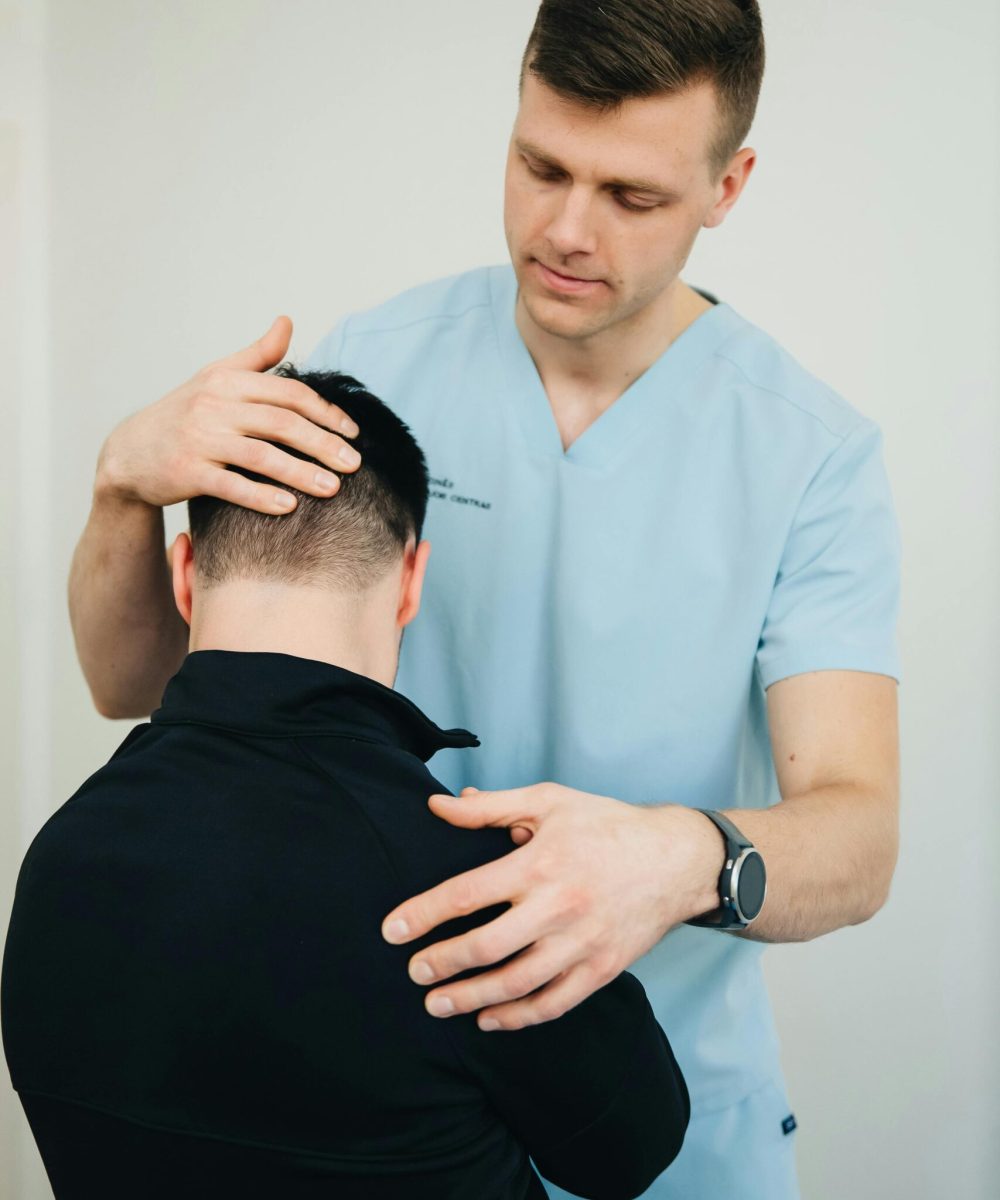
Highly rated on Google · Science City, Ahmedabad
14+ years in orthopaedic and sports physiotherapy
MPT + Fellowship in Osteopathy · Evidence-based treatment
Trusted by desk workers, homemakers, athletes, and active adults
What Patients Say
Dr. Mansi is an exceptional physiotherapist. She is kind, attentive, and truly cares about her patients. I had persistent shoulder and neck pain due to my desk job, but thanks to her targeted exercises and treatment, the pain is completely gone. Her calm and understanding approach makes a huge difference in the healing process.

Common Neck Conditions We Treat
If you are dealing with any of the following, you are in the right place.
- Mechanical Neck Pain & Stiffness: Restricted rotation, chronic tightness, and neck pain that worsens with sustained postures or device use
- Cervicogenic Headaches: Headaches originating from upper cervical (C0–C2) joint restriction — often mistaken for migraines
- Pinched Nerve & Radiculopathy: Radiating pain, tingling, heaviness, or weakness travelling into the arm, hand, or fingers
- Whiplash & Sports Neck Injuries: Acute cervical strain from contact sport, road accidents, or sudden impact
- Cervicogenic Dizziness: Off-balance or lightheaded sensations driven by upper neck dysfunction rather than the inner ear
- Tech Neck & Forward Head Posture: Neck and upper back pain from sustained mobile and laptop use — increasingly common across all age groups
- Postural Neck Hump: Stiffness and tissue build-up at the base of the neck — usually a secondary finding from long-standing thoracic and cervical restriction

Signs You May Benefit From Treatment

You do not need a scan or a referral to reach out. If you recognise any of these, a physiotherapy assessment can give you clarity.
- Pain or a pulling sensation when rotating your neck to look over your shoulder
- Stiffness that is worst in the morning or after sitting at a desk for more than 30–40 minutes
- Headaches that start at the base of the skull or behind the eyes — particularly after screen time
- Tingling, numbness, or a heavy feeling spreading into the shoulder, arm, or fingers
- Neck tension that builds through the day and is not relieved by stretching or massage
- A feeling that your neck is locked in one position after waking, or after looking down at a phone
Why Neck Pain Keeps Coming Back
The most common reason neck pain returns is that only the tight muscles were treated — with massage, heat, or stretching — while the joint mechanics, deep muscle control, and fascial system driving the problem were never addressed.
When the deep cervical flexors — the true stabilising muscles of the neck — are weak or inhibited, the superficial muscles like the SCM and scalenes take over. These muscles are not designed for sustained postural work. They fatigue, develop trigger points, and refer pain into the head, shoulder, and arm. Treating the surface tension without retraining the deep system gives relief for a few days before the pattern reasserts itself.
There is also a fascial layer that most neck pain treatment never reaches. The scalene fascia, thoracic inlet, and anterior neck structures — including the SCM, subclavius, hyoid group, and platysma — form a continuous tension system that directly influences how freely the cervical spine can move. Restricted breathing patterns and diaphragm tension feed directly into chronic neck stiffness in ways that joint mobilisation alone does not resolve.
The only way to break this cycle is an assessment that looks at the full picture — not just where it hurts.
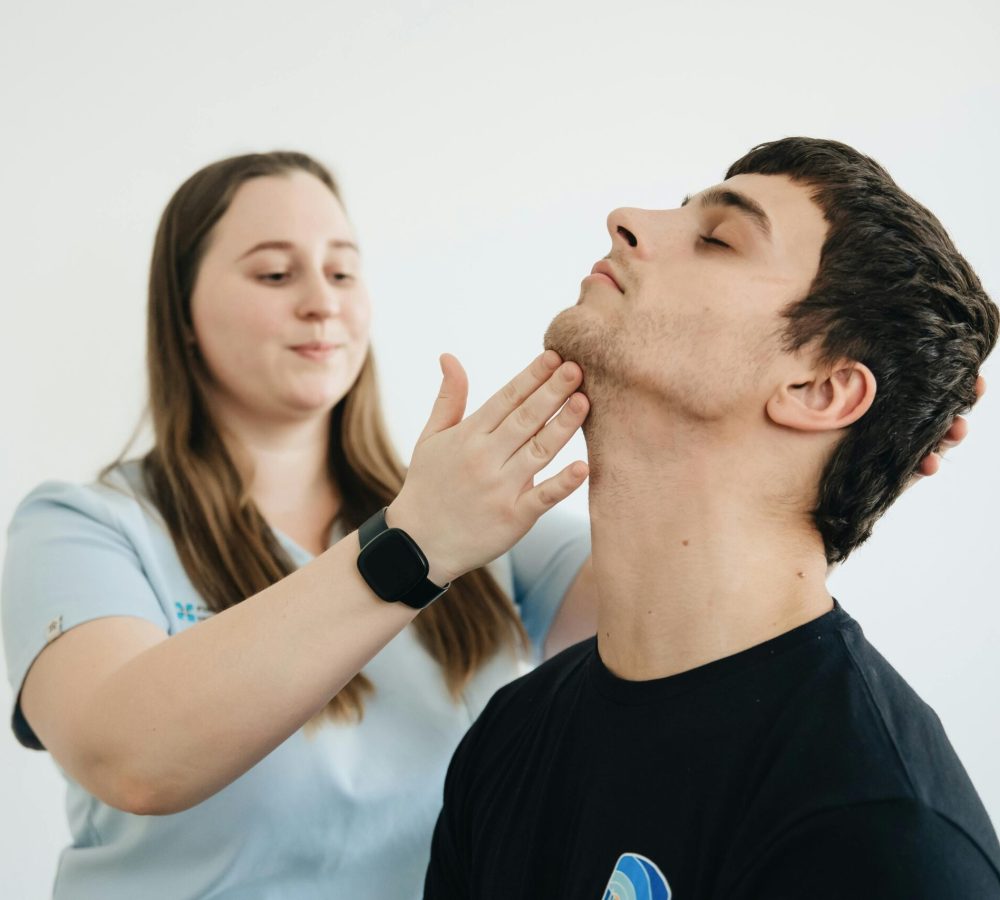
How MoveSync Treats Neck Pain
Treatment at MoveSync follows a structured process — from root cause assessment through to strength and prevention.
Your physiotherapist will assess cervical joint mechanics, deep and superficial muscle function, fascial restrictions, neural tension, and breathing patterns — building a plan specific to your presentation, your posture, and what you need to return to.
Restore joint movement and reduce pain
Joint mobilisation using Mulligan and Maitland concepts to restore natural glide at the cervical and upper thoracic segments. Osteopathic MET to release restricted cervical and thoracic joints using the patient's own gentle muscle contractions — precise and effective for both acute and chronic stiffness. Dry needling to deactivate trigger points in the SCM, scalenes, suboccipitals, and upper trapezius that are maintaining the pain and referral pattern.
Address the fascial and anterior neck system
Stecco fascial manipulation targeting the scalene fascia, thoracic inlet, and anterior neck muscles — including the SCM, subclavius, hyoid group, and platysma. These structures form a continuous tension system that standard neck treatment rarely addresses. Diaphragm release and breathing retraining where restricted breathing patterns are contributing to chronic cervical tension — a clinically significant and frequently overlooked driver of neck stiffness.
Rebuild deep neck stability
Pressure biofeedback to objectively measure deep cervical flexor activation — the true stabilising muscles of the neck. Targeted retraining to restore the correct balance between deep stabilisers and the superficial SCM and scalene muscles that have been compensating. This is what prevents the pain from returning after joint treatment.
Prevent recurrence
Ergonomic guidance specific to your work environment — monitor height, device position, and seated mechanics. For athletes and contact sport players, a structured cervical return-to-sport protocol before resuming impact activity. A home programme built around your daily routine and posture habits.
For cases involving cervicogenic headaches, jaw-related headaches, or dizziness — the upper cervical spine and jaw joint are directly connected and are often best assessed together. Our TMJ and headache programme covers this specific connection in more detail.
Treatment may include joint mobilisation, osteopathic MET, dry needling, Stecco fascial manipulation, IASTM, pressure biofeedback, diaphragm release, neural mobilisation, and progressive deep neck strengthening — structured around your symptoms, posture, and activity level.
What Happens at Your First Session
Your first session is 45–60 minutes. A full history is taken — how long the stiffness or pain has been present, what postures or activities aggravate it, whether headaches or arm symptoms are involved, and what previous treatment has and has not helped.
Your physiotherapist will assess cervical range of motion, joint mechanics, deep neck muscle function, neural tension, and breathing patterns. If you have brought a scan report, it will be reviewed in the context of your clinical presentation.
You will leave with a clear explanation of what is driving your symptoms and a realistic plan for what comes next. There is no pressure to commit to a course of sessions at your first visit.

Who Comes to MoveSync for Neck Pain

We regularly work with:
- Desk workers and IT professionals whose neck stiffness builds through the day and connects to headaches or shoulder tension
- Homemakers dealing with chronic neck and upper back pain from sustained household and childcare postures
- Mobile and screen users of all ages managing tech neck, forward head posture, and related headaches
- Athletes and wrestlers managing whiplash, cervical strain, or post-impact neck stiffness
- Patients whose neck pain travels into the arm — tingling, heaviness, or weakness that has not been fully explained
- Active adults in Science City, Sola, Bodakdev, and Thaltej looking for a root-cause approach that goes beyond massage and heat
If your neck pain is connected to chronic tension, postural overload, or long-standing stiffness, our Chronic Pain Rehab programme may be the right starting point.
Why Patients Choose MoveSync
What makes MoveSync different for neck pain is the depth of assessment. Most neck treatment addresses the posterior neck — the muscles and joints at the back. At MoveSync, the anterior neck system — the SCM, scalenes, subclavius, hyoid group, and the fascial layers connecting them to the thoracic inlet and diaphragm — is assessed and treated as part of the same picture. This is where chronic, treatment-resistant neck pain most often has its roots. Combined with pressure biofeedback for objective deep neck muscle retraining and fellowship-trained osteopathic manual techniques, the approach goes significantly beyond what a standard physiotherapy clinic offers.
- Anterior neck and fascial system assessment — SCM, scalenes, thoracic inlet, and diaphragm as drivers of chronic neck pain
- Pressure biofeedback for objective deep cervical flexor retraining — not guesswork
- Advanced osteopathic techniques including MET and upper cervical mobilisation — fellowship-trained
- Treatment covers desk workers, homemakers, athletes, and patients with arm symptoms or headaches

Frequently Asked Questions
Why does my neck hurt more after sitting at a desk — even with decent posture?
Can neck problems really cause headaches, dizziness, or arm tingling?
How is this different from a regular massage or heat pack?
Do I need an MRI or X-ray before coming in?
What happens at my first appointment at MoveSync?
Take the Next Step
If neck stiffness, pain, or restricted movement is affecting your work, your sleep, or your daily life — you do not have to manage around it indefinitely.
Treating other areas too? Browse all conditions we help with at MoveSync