Sports & Performance Rehab
Sports & Performance Rehab in Science City, Ahmedabad
Getting out of pain is not the same as being ready to play. Here is the difference — and why it matters.
Most sports injuries are managed well in the early stages. The pain settles, the swelling goes, the movement returns. And then the athlete goes back — too soon, too fast, or without the right preparation — and the injury happens again. Sometimes worse than the first time.
The gap between "pain-free" and "sport-ready" is where most rehab programmes stop. At MoveSync, it is where ours begins.
Sports and performance rehab at MoveSync is built around three principles: return to sport is earned through objective testing, not assumed through time; every sport has its own physical demands and its own return-to-play standard; and recovery is as important as training in determining whether an athlete stays healthy across a full season.
MoveSync is led by Dr. Mansi Shah, MPT (Orthopaedics & Sports) with a Fellowship in Osteopathy and 14+ years of experience in musculoskeletal and sports physiotherapy — and works with individual athletes, sport-specific academy programmes, and gym-based clients across Science City and Ahmedabad.
Sport-Specific Return to Play
For athletes recovering from injury who want to return to training and competition — correctly
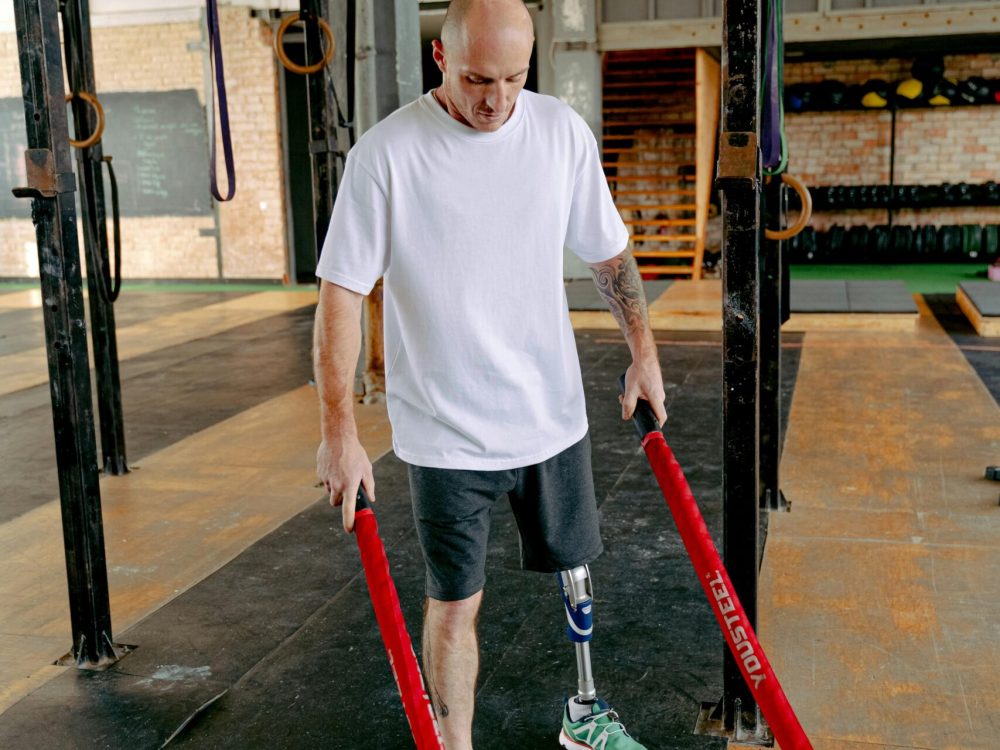
Return to sport at MoveSync is not a time-based decision. It is a testing-based decision — and the testing is specific to your sport, not a generic battery applied to every athlete regardless of what they play.
A wrestler needs to demonstrate explosive hip and trunk control under contact load. A cricketer returning from a bowling shoulder injury needs sport-specific overhead loading and deceleration strength. A runner needs single-leg stability, landing mechanics, and the ability to handle progressive kilometres without compensatory patterns developing. A badminton player needs reactive lateral movement, jump landing mechanics, and rotational control. These are not the same tests — because the sports are not the same demands.
At MoveSync, return-to-sport testing is built around the specific movement patterns, load demands, and injury risks of your sport. Clearance is given when the objective benchmarks for your sport are met — not when a fixed number of weeks have passed and the pain has gone.
Live Movement Correction
For gym-goers and athletes whose injury is being driven or maintained by movement errors
Most gym injuries are not random. They are the predictable result of a movement pattern that has been loading the wrong structure — often for months — until something gives. A squat with valgus collapse. A deadlift with lumbar rounding. A bench press with anterior shoulder drift. A bowling action with inadequate trunk rotation.
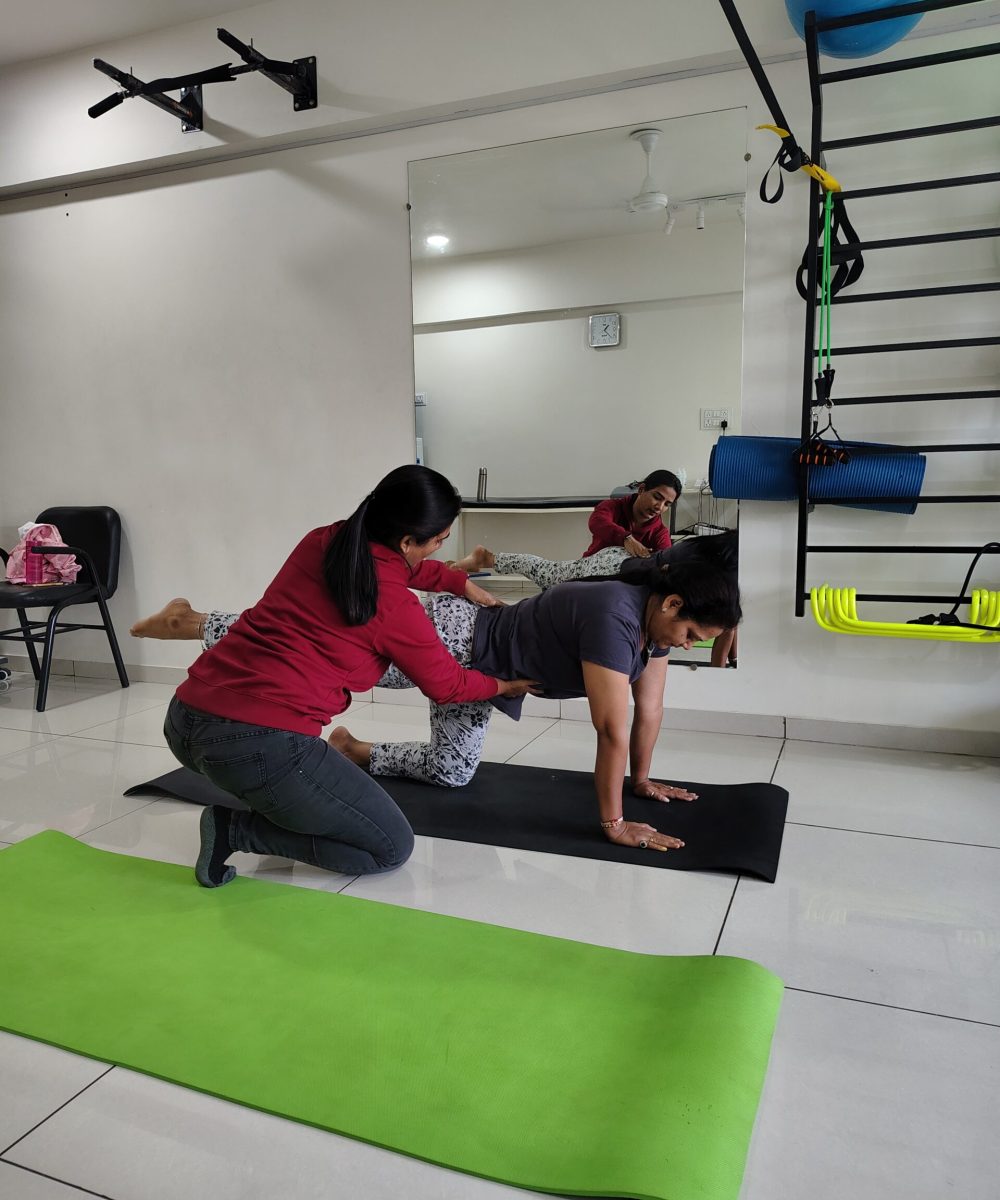
At MoveSync, live movement assessment means you perform your actual gym movements or sport-specific patterns — in clinic or at one of our partner gym facilities — so the mechanical error driving your injury can be identified and corrected in real time, under real load. Not described from memory. Not guessed from a questionnaire. Watched, assessed, and corrected while you move.
MoveSync has active clinical partnerships with two gyms in Ahmedabad — allowing assessment and correction to happen in the environment where the injury occurs, not just in a treatment room.
Injury Prevention Programmes
For academies, young athletes, and active adults who want to stay on the field
The most effective sports rehab is the kind that prevents the injury from happening in the first place.
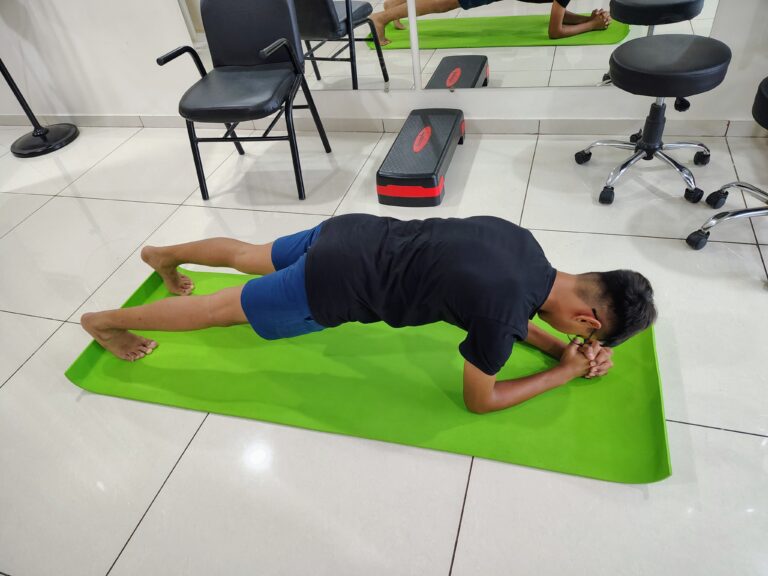
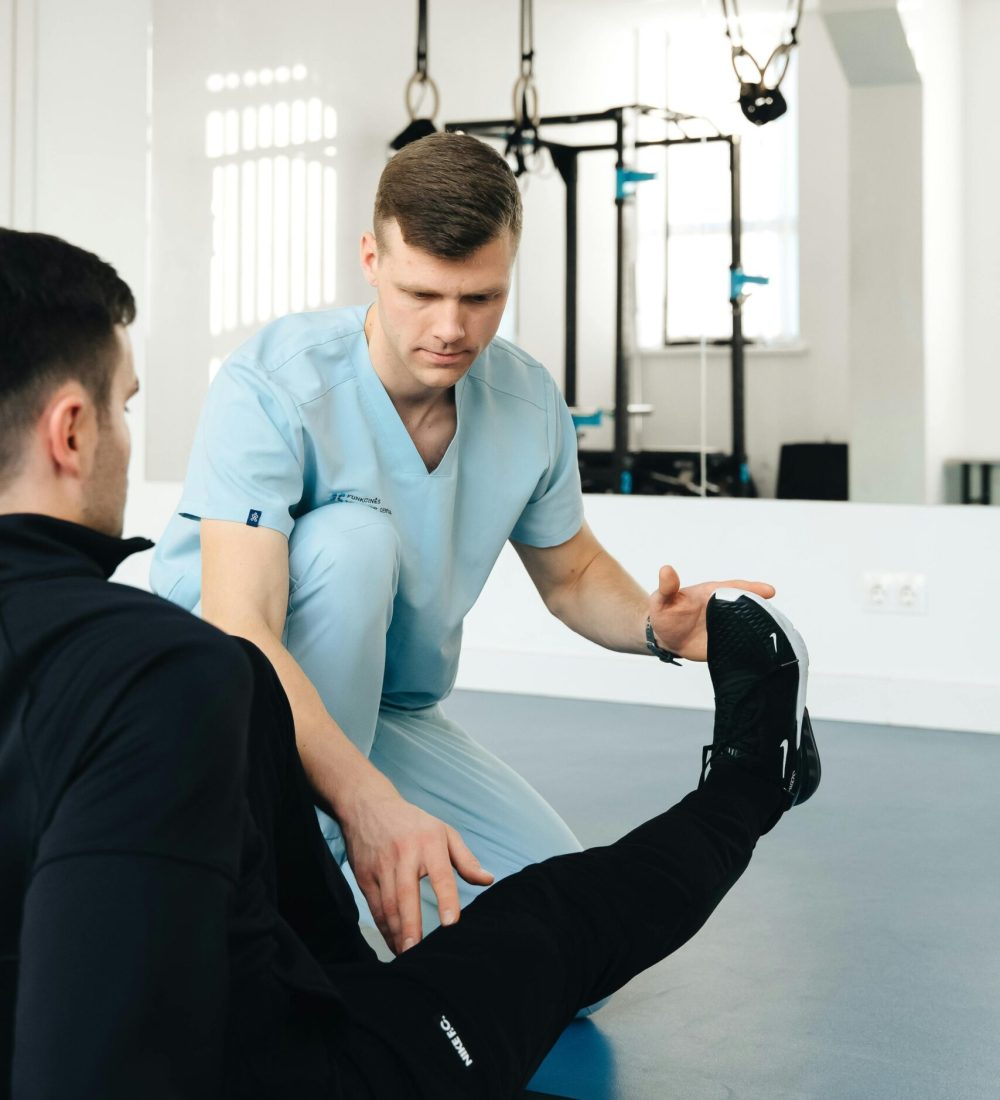
MoveSync provides structured injury prevention programmes for sport-specific academies and individual athletes — currently including a badminton academy programme covering movement screening, load management, and targeted strength work for the most common injury patterns in overhead racquet sport.
For individual athletes, injury prevention work is integrated into the training programme — not treated as a separate add-on. Current individual programmes include a cricket athlete, an athletics (track) athlete, and a triathlon athlete — each with a strength, conditioning, and recovery plan built around their sport’s specific demands and competition calendar.
For young athletes specifically — the most common reason a return to sport fails or leads to re-injury is not physical. It is a combination of too-early return driven by parent or coach pressure, training overload from multiple simultaneous activities, and nutritional deficiency during periods of rapid growth. At MoveSync, these factors are assessed and addressed alongside the physical rehabilitation — because clearing a 14-year-old cricketer to bowl again without addressing the training load and nutrition that caused the injury in the first place is not genuine injury prevention.
Recovery Sessions
For athletes managing high training loads, post-competition fatigue, and in-season tissue maintenance
Tissue release
- Percussion therapy (Hypervolt by Hyperice)
- Foam rolling
- Stretching
- Targeted soft tissue work
Manual therapy
- Dry cupping
- IASTM
- Dry needling where deeper fascial or trigger point release is needed
Movement maintenance
- Mobility work
- Active recovery movements to maintain range and neuromuscular quality between training blocks
Athletes are also guided on home-based recovery protocols — epsom salt soaks, contrast water therapy, and ice bath use — so that recovery continues between sessions and is not dependent solely on clinic visits.
Recovery sessions are available for individual athletes across all sports — including runners, cricketers, badminton players, wrestlers, swimmers, and triathletes.
What to Expect
Return to sport assessment
Live movement correction
Recovery sessions
At MoveSync Specifically
MoveSync is one of very few physiotherapy clinics in Ahmedabad with active sport-specific academy partnerships, gym facility tie-ups for live movement assessment, and individual athlete programmes that integrate strength, conditioning, and recovery under the same clinical roof.
The athlete portfolio at MoveSync includes patients who have competed at national level, completed Ironman 70.3 and ultramarathon events, set Guinness World Records, and trekked to Everest Base Camp — all with MoveSync as their sports physiotherapy support. The same clinical rigour — sport-specific assessment, objective return-to-play testing, and individualised recovery — applies to every athlete, regardless of whether they are competing at national level or returning to recreational weekend sport.
If your goal is to stay healthy across a full season, return to competition after injury, or build the physical resilience to handle increasing training loads — sports and performance rehab at MoveSync is built around that goal specifically.
Conditions Where These Techniques Are Commonly Used
Frequently Asked Questions
How do you decide when an athlete is ready to return to sport?
My child's coach wants them back training in two weeks. What should I do?
Can you help with in-season recovery — not just injury rehab?
Take the Next Step
If you are an athlete returning from injury, managing a high training load, or preparing for competition — an assessment will give you a clear picture of where your body stands and what it needs.