Advanced Osteopathy
Advanced Osteopathy in Science City, Ahmedabad
Your pain may not be coming from where you think it is.
Most physiotherapy treats the area that hurts. Advanced osteopathy asks a different question: what else in the body is creating the conditions for that pain to exist?
Your body is not a collection of separate parts. Every structure — every organ, every fascial layer, every cranial membrane — is connected. When one part loses its natural rhythm or mobility, the effects travel. Sometimes far. A diaphragm that cannot recoil freely creates mid-back pain and breathing difficulty. A liver under fascial tension reduces shoulder rotation on the right side. Restricted cranial membranes drive headaches that no amount of neck treatment resolves. These are not theories. They are clinical findings — assessable by hand, treatable in session, and verifiable by what the patient feels immediately after.
At MoveSync, advanced osteopathic techniques are applied where standard physiotherapy reaches its limits — for complex, persistent, or whole-body presentations where the obvious mechanical cause has already been treated and the pain keeps returning.
MoveSync is led by Dr. Mansi Shah, MPT (Orthopaedics & Sports) with a Fellowship in Osteopathy — one of very few physiotherapists in Ahmedabad trained to this level in advanced osteopathic technique.
Understanding the Concept — Starting With What You Already Know
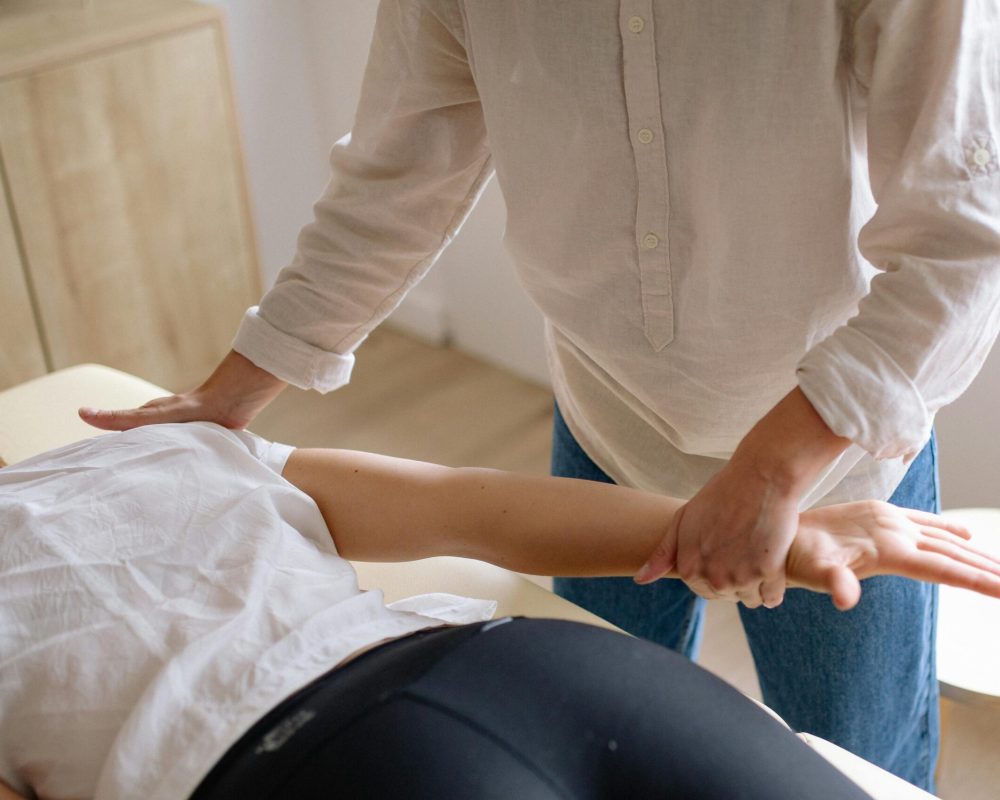
Every tissue in your body has a natural rhythm and movement. Your heart beats. Your lungs expand and recoil. Your gut contracts and relaxes in waves. These movements are not isolated — they influence the structures around them continuously.
When these natural movements become restricted — through injury, surgery, chronic stress, poor posture, or accumulated tension — the restriction does not stay local. The diaphragm that tightens under chronic stress compresses the thoracic spine and pulls the mid-back into a pattern that no spinal joint treatment can fully release — because the driver is not the spine. The caecum restricted from old inflammation or surgery creates a tension pattern that pulls on the right lower back and hip. The pericardium under tension limits thoracic rotation and contributes to a shoulder that never quite frees up after injury.
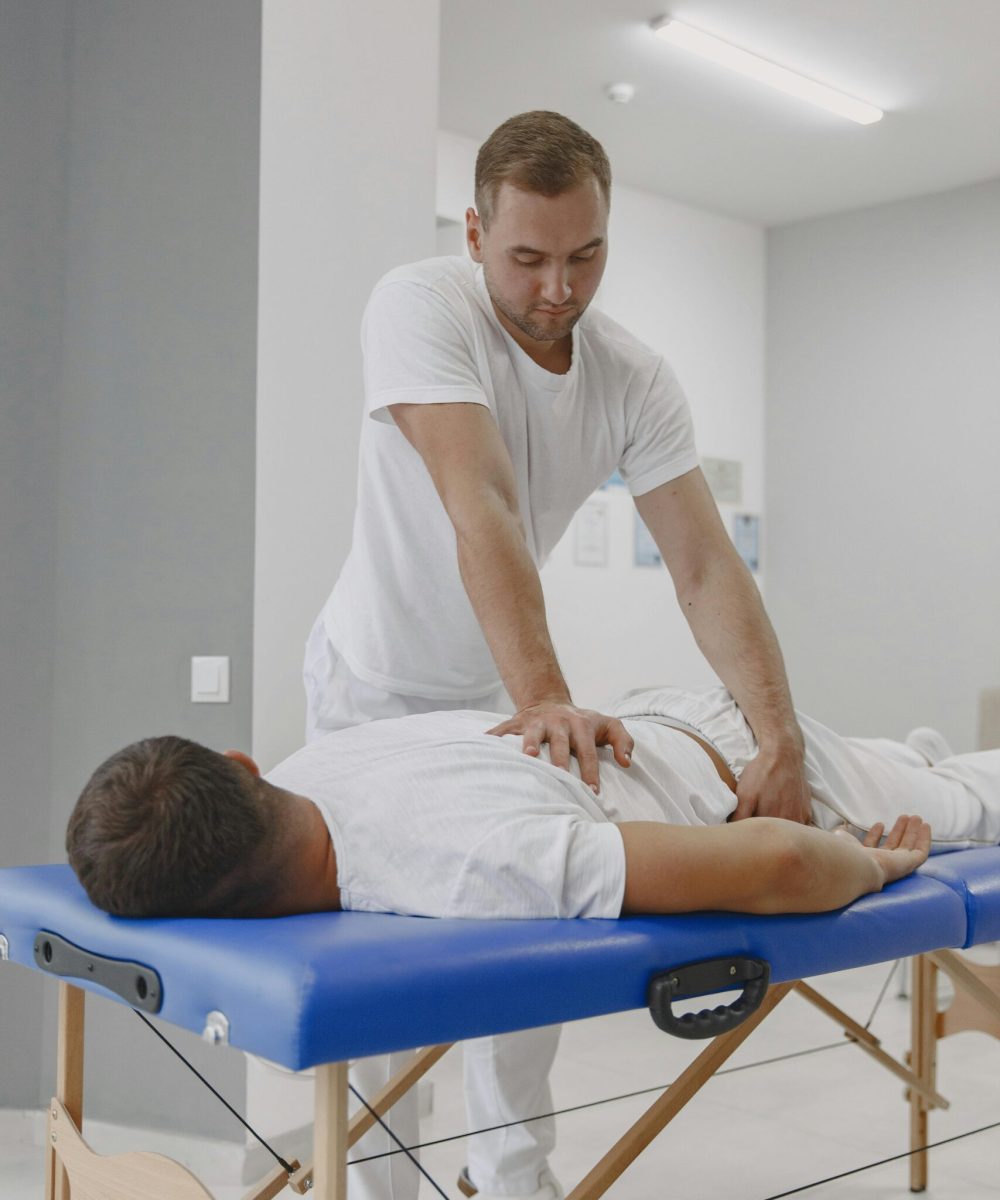
Osteopathy was built on this understanding. Advanced osteopathic techniques assess and treat these deeper connections — restoring the natural mobility of organs, cranial structures, and fascial systems so that the musculoskeletal system above them can respond properly to treatment.
What We Use — Three Distinct Approaches
Craniosacral Therapy and Cranial Osteopathy
For headaches · stress-driven pain · autonomic dysregulation · wellness
The craniosacral system — the membranes and cerebrospinal fluid surrounding the brain and spinal cord — has its own subtle rhythm. When restrictions develop in this system, the effects are often felt as chronic headaches, facial tension, a sense of pressure in the head, disturbed sleep, or a nervous system that feels perpetually activated and unable to settle.
Craniosacral therapy uses an extremely light touch to assess and release these restrictions. It is the gentlest technique used at MoveSync — patients often describe feeling deeply relaxed during the session, sometimes falling into a light sleep. The effects are frequently noticed in the hours and days that follow: improved sleep, a lighter feeling in the head and body, reduced headache frequency, and a sense that the nervous system has reset.
A lawyer presenting with severe, debilitating headaches experienced a 70% reduction in pain in a single session following cranial osteopathic work targeting upper cervical and cranial restrictions. A hypnotherapist — who understood exactly what was happening physiologically — reported measurable parasympathetic responses after her session: increased resting body temperature, a lighter, settled feeling in her abdomen, and the deepest sleep she had experienced in months.
These are not unusual outcomes for this technique. They are what happens when the right restriction is found and released by someone trained to find it.
Cranial osteopathy is also used at MoveSync as part of a wellness programme — for patients who are not in pain but want to use it for ongoing stress management, autonomic regulation, and maintenance of nervous system health. This is a growing area of use among health-aware professionals and is available independently of injury or pain.
Visceral Manipulation
For back pain · shoulder restriction · knee mechanics · post-surgical recovery · digestive tension
Visceral manipulation was developed by French osteopath and physiotherapist Jean-Pierre Barral after observing that restrictions in organ mobility consistently produced musculoskeletal pain patterns at predictable sites. The technique uses gentle, specific manual contact to assess organ mobility and release restrictions in the organ itself and in the fascial and ligamentous connections surrounding it.
At MoveSync, visceral manipulation is most commonly used for:
- Mid-back pain and breathing restriction — diaphragm recoil techniques produce immediate relief in most cases. For patients with mid-back pain that has not responded to spinal treatment, restricted diaphragm mobility is frequently the missing driver. From the first session, the change in mid-back mobility and breathing ease is typically noticeable.
- Lower back and hip pain — caecal and ileocecal valve restrictions, particularly in patients with a history of appendix surgery, abdominal surgery, or prolonged gut inflammation, create tension patterns that directly load the right lower back and hip.
- Shoulder ROM restriction — liver fascial tension reduces right shoulder rotation. Working on the liver — a technique that sounds counterintuitive but is clinically verifiable — produces measurable and immediate improvement in shoulder range of motion.
- Knee pain — caecal restriction alters lower limb load distribution in ways that standard knee treatment cannot address. When knee pain has a strong right-sided or postural component that does not respond to hip and ankle work, visceral assessment often reveals the driver.
- Post-surgical recovery — abdominal scar tissue and adhesions from C-section, appendectomy, or other abdominal procedures create fascial tension that travels upward and downward through the body. Visceral release is frequently the most effective single intervention for post-surgical patients whose pain has persisted despite standard rehabilitation.
Intra-Oral Osteopathic Release
For TMJ dysfunction · jaw tension · post-splint pain · facial asymmetry
The pterygoid and masseter muscles — the primary muscles responsible for jaw clenching, grinding, and TMJ dysfunction — are not fully accessible from outside the mouth. Intra-oral osteopathic release involves gentle, specific manual contact inside the mouth to directly release these muscles and restore normal jaw mechanics.
This technique is used at MoveSync for patients whose jaw pain, clicking, facial tension, or asymmetry has not fully resolved with dental splint therapy alone. A splint protects the teeth — it does not release the muscular and fascial tension driving the jaw into the dysfunctional pattern. Intra-oral release addresses what the splint cannot.
It is also used in combination with upper cervical mobilisation and craniosacral work for complex TMJ presentations where the jaw, upper cervical spine, and cranial system are all contributing.
What to Expect
Advanced osteopathic sessions at MoveSync are notably different from standard physiotherapy in how they feel.
The techniques are gentle — significantly lighter in touch than joint mobilisation or deep tissue work. For craniosacral and visceral techniques, the contact is often so light that patients initially wonder if anything is happening. The effects, however, are frequently immediate and tangible — a release of tension, a change in breath, a warmth or lightness in the treated area.
Most patients feel deeply relaxed during and after the session. Some feel mildly tired or emotionally settled — a sign that the parasympathetic nervous system has activated. These responses are normal and expected. Drinking water, resting if possible, and avoiding strenuous activity on the same day allows the body to integrate the changes from the session.
One thing patients consistently find reassuring: we assess, treat, and immediately re-test your movement in the same session — so you can feel the changes in your own body in real time, rather than being asked to take the results on faith.
For intra-oral work, the contact inside the mouth is precise and extraordinarily gentle — nothing like a dental procedure. The pressure used is light and specific, targeting the jaw muscles directly rather than the teeth or gums. Most patients experience an immediate, flooding sense of relief in their jaw joints — often within the first minute of the technique being applied.
At MoveSync Specifically
Dr. Mansi Shah holds a Fellowship in Osteopathy — a six-month post-graduate qualification in advanced osteopathic technique. This training covers craniosacral therapy, visceral manipulation, intra-oral release, and autonomic and cranial osteopathic approaches. Very few physiotherapists in Ahmedabad hold this qualification or apply these techniques in clinical practice.
These techniques are not offered as an alternative to evidence-based physiotherapy. They are applied where the clinical assessment indicates they are the right tool — for presentations where the organ-fascial system is contributing to pain that standard musculoskeletal treatment alone cannot fully resolve.
Who This Is For
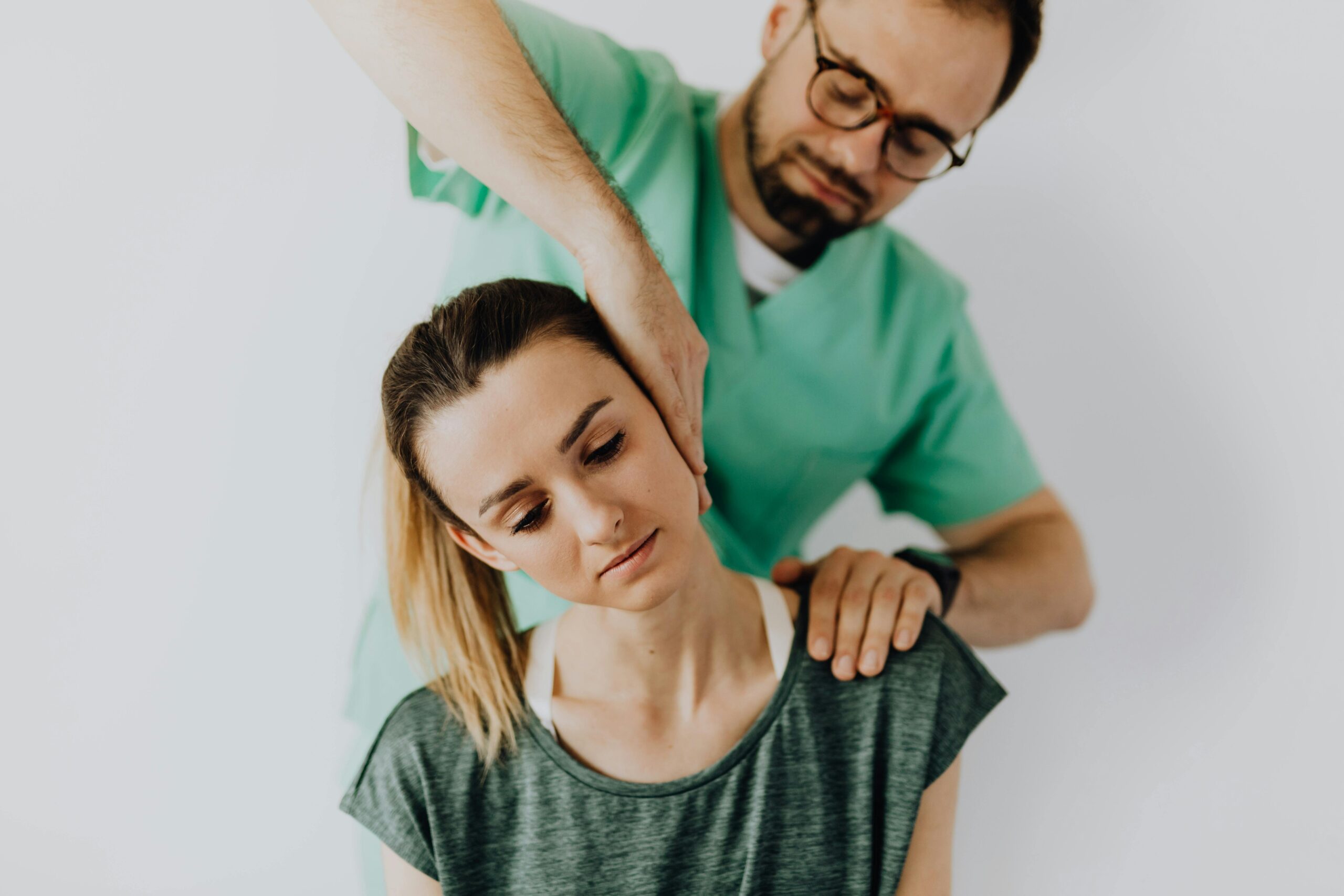
Patients with complex or treatment-resistant pain
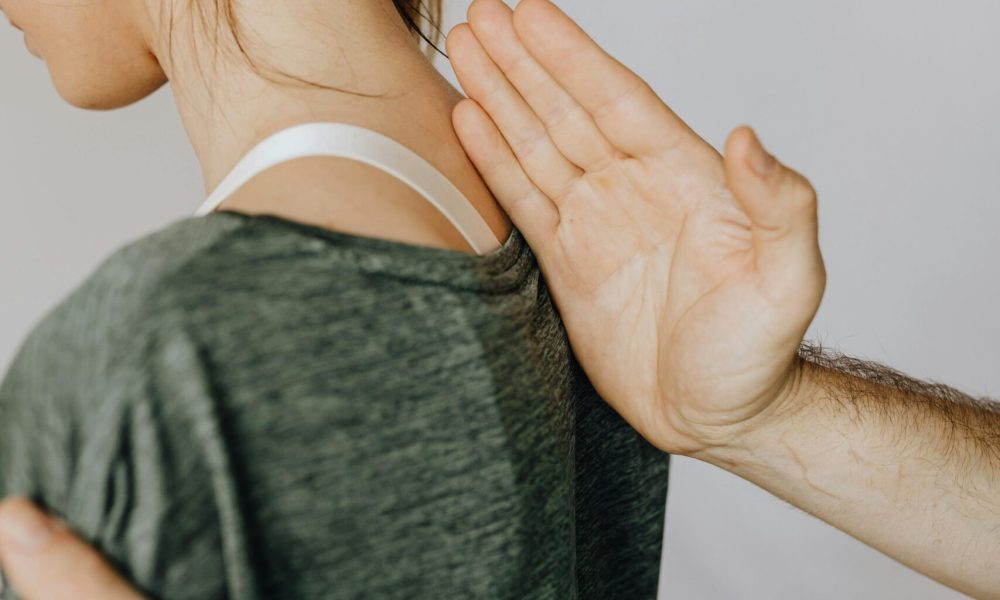
If you have seen multiple practitioners, tried standard physiotherapy, and still have pain that does not resolve — there is often a visceral, fascial, or cranial component that has never been assessed. These techniques are specifically suited to presentations that have defied conventional treatment.
Health-aware patients using osteopathy for wellness
Craniosacral therapy and autonomic reset techniques are increasingly sought by professionals and active adults who are not in pain but want to use hands-on osteopathic work for stress regulation, nervous system maintenance, and overall functional health. This is available at MoveSync independently of injury or rehabilitation.
Conditions Where Advanced Osteopathy Is Commonly Used
Frequently Asked Questions
This sounds very different from standard physiotherapy. How do I know if it is right for me?
Is visceral manipulation safe — are you actually touching the organs?
I am not in pain. Can I use craniosacral therapy for stress and wellness?
Take the Next Step
If you have pain that has not responded to standard treatment — or if you are interested in advanced osteopathic work for wellness and stress regulation — the right starting point is an assessment.