
Physical Modalities
Physical Modalities & Electrotherapy in Science City, Ahmedabad
Used selectively, at the right stage, for the right tissue — these tools accelerate what the body is already trying to do.
Physical modalities are evidence-based electrophysical and energy-based treatments that support healing, pain relief, circulation, tissue recovery, and rehabilitation. At MoveSync, they are prescribed only when clinical assessment shows they will add value alongside manual therapy and exercise rehabilitation.
Therapeutic Modalities
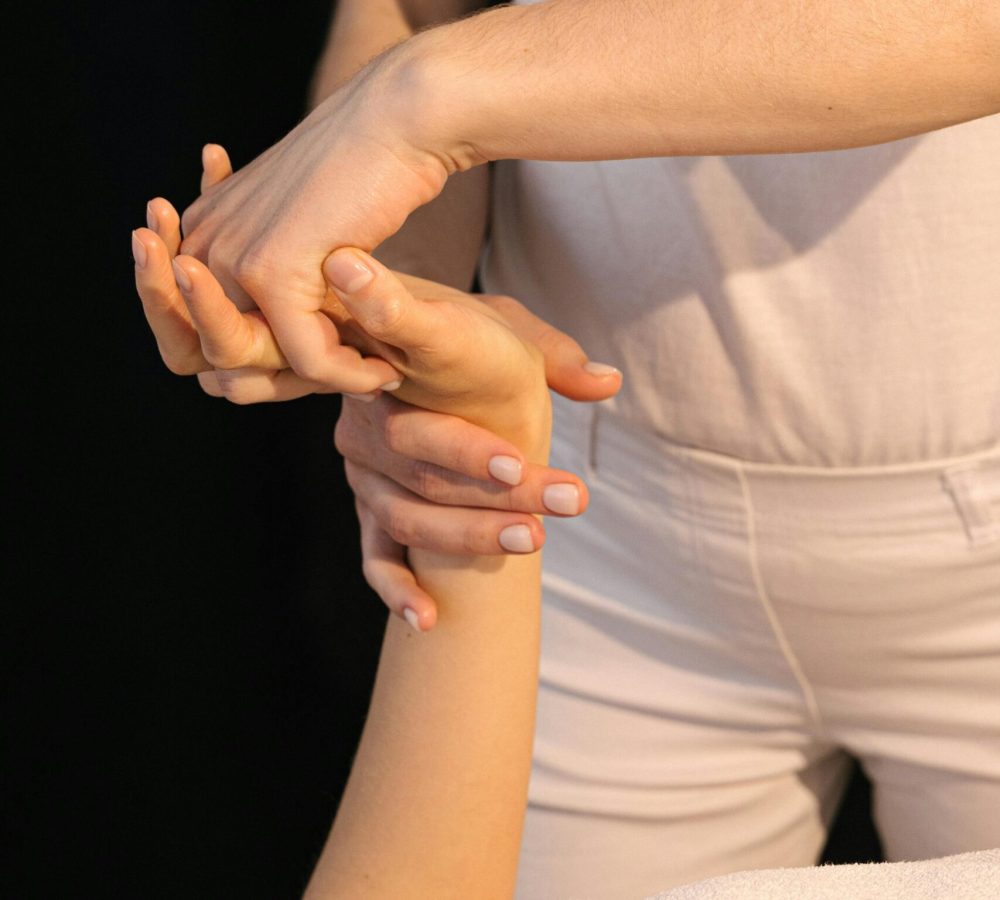
These modalities directly influence tissue biology by stimulating cellular repair, reducing inflammation, and accelerating healing.
PEMF — Pulsed Electromagnetic Field Therapy
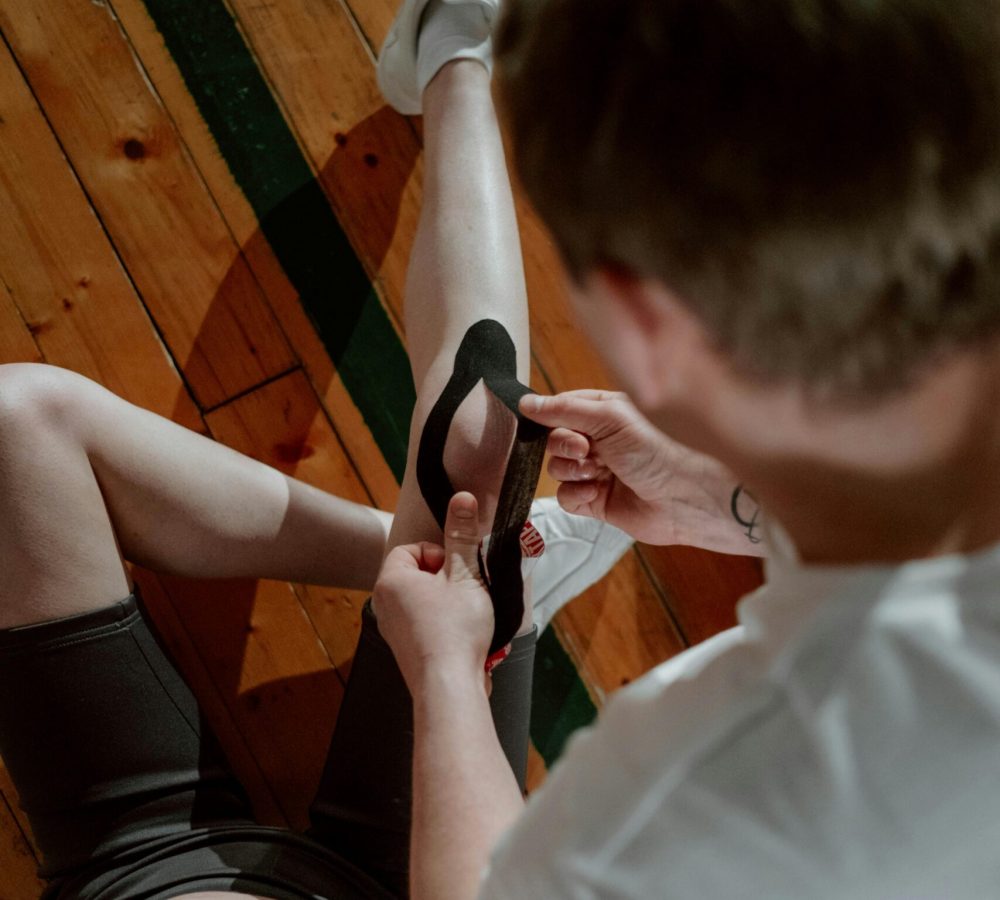
Think of PEMF like charging your body’s cells the way you charge a phone — restoring the electromagnetic environment that cells need to repair, reduce inflammation, and function normally. Every cell in the body operates within an electromagnetic field. Injury, chronic inflammation, and disease disrupt that field. PEMF applies low-frequency electromagnetic pulses that restore cellular charge and support the repair process from the inside out.
Best suited for: Patients with bone stress injuries, slow-healing tissue, chronic joint inflammation, or post-surgical recovery where tissue healing has plateaued despite correct rehabilitation.
Used for:
- Stress fractures and bone healing — supporting the cellular environment for bone repair
- Chronic joint inflammation — reducing inflammatory activity at the tissue level
- Post-surgical recovery — supporting tissue healing in the early post-operative phase
- Long-standing pain — where chronic inflammation is maintaining a pain cycle that manual therapy alone has not fully resolved
Laser Therapy — Low-Level Laser / Photobiomodulation
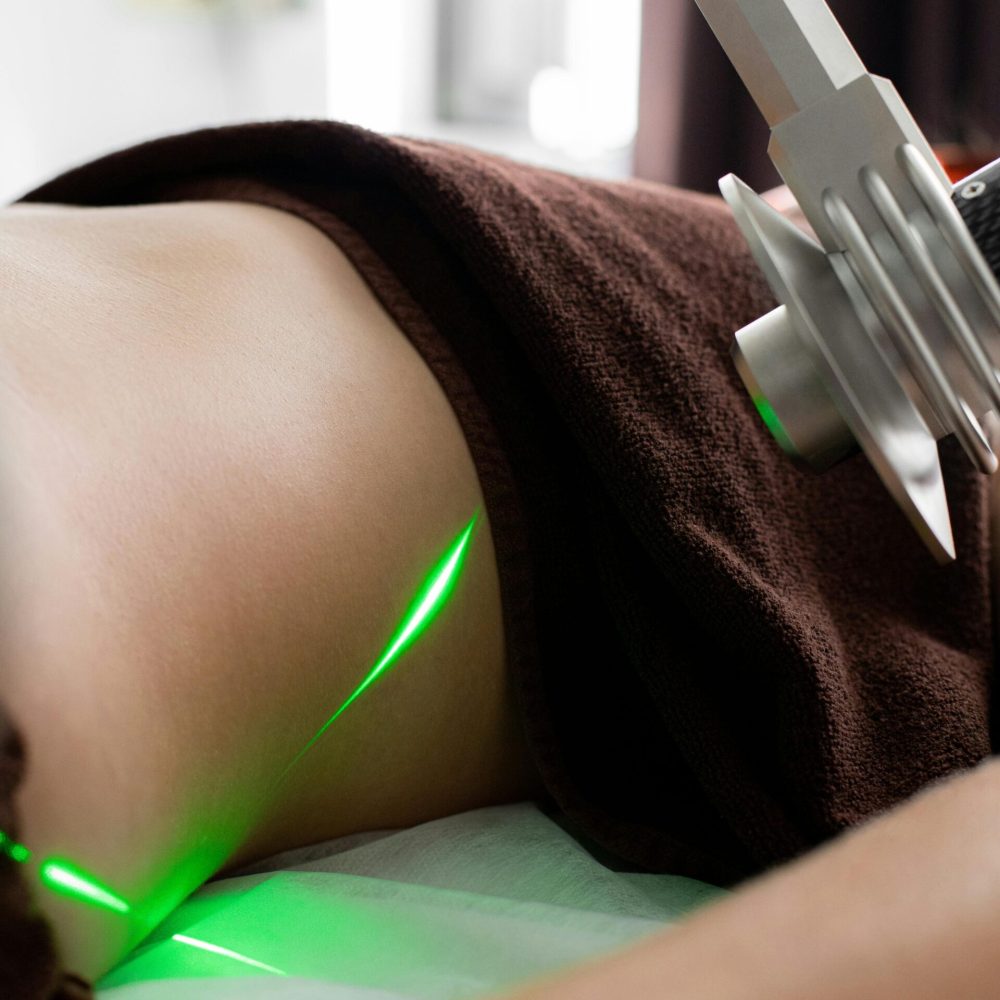
Specific wavelengths of light activate biological repair processes in tissue the same way sunlight triggers vitamin D production — a cellular switch turned on by the right frequency. Low-level laser delivers concentrated light energy at wavelengths that penetrate tissue and stimulate mitochondrial activity, accelerating the production of energy that cells need to repair.
It produces no heat and no discomfort. Most patients feel nothing during the session. The effects occur at the cellular level — and are measurable in tissue healing rates, tendon repair, and inflammation reduction.
Best suited for: Athletes or active patients with stubborn tendinopathy that has plateaued despite correct loading, or patients with acute soft tissue injuries where accelerating the early healing phase will allow rehabilitation to begin sooner.
Used for:
- Achilles and patellar tendinopathy — accelerating tendon cell repair alongside progressive loading
- Rotator cuff injuries — supporting tissue-level healing in partial tears and tendinosis
- Acute soft tissue injuries — reducing early inflammation and accelerating the healing timeline
- Post-surgical tissue healing — supporting repair in the weeks following surgery
PENS — Percutaneous Needle Electrical Stimulation with Microcurrent
PENS is where dry needling meets electrotherapy — and the combination produces results that neither achieves alone.
A fine acupuncture needle is placed precisely at the target tissue — a trigger point, a tendon, a nerve pathway, or a periosteal point — and a controlled microcurrent is delivered through the needle directly to that structure. The needle provides mechanical precision. The microcurrent provides biological stimulation. Together they produce a level of tissue-specific treatment that surface electrotherapy cannot reach and dry needling alone does not provide.
At MoveSync, PENS uses microcurrent — not the milliampere-level currents used in older or less precise systems. Microcurrent application is more comfortable, more controllable, and more appropriate for sensitive structures like tendons and nerves. The precision of needle placement combined with the gentleness of microcurrent delivery makes this one of the most effective and well-tolerated modalities for deep tissue and tendon conditions.
The clinical result: A patient with rotator cuff tendinopathy — where surface treatments had produced limited improvement — experienced complete pain relief in a single session following microcurrent PENS applied precisely to the affected tendon. This level of response is not guaranteed, but it illustrates what becomes possible when electrical stimulation reaches the tissue directly rather than through the skin.
Best suited for: Patients with tendinopathy, deep muscle or nerve pain, or presentations that have responded partially to dry needling but not reached full resolution.
Used for:
- Rotator cuff tendinopathy — direct stimulation of the tendon-fascial interface
- Patellar and Achilles tendinopathy — where loading alone has not produced full resolution
- Deep myofascial pain — combining trigger point release with electrical stimulation
- Nerve-related pain — PENS along nerve pathways for radiculopathy and neuropathic pain
- TMJ and facial pain — precise microcurrent application to jaw muscles and facial structures
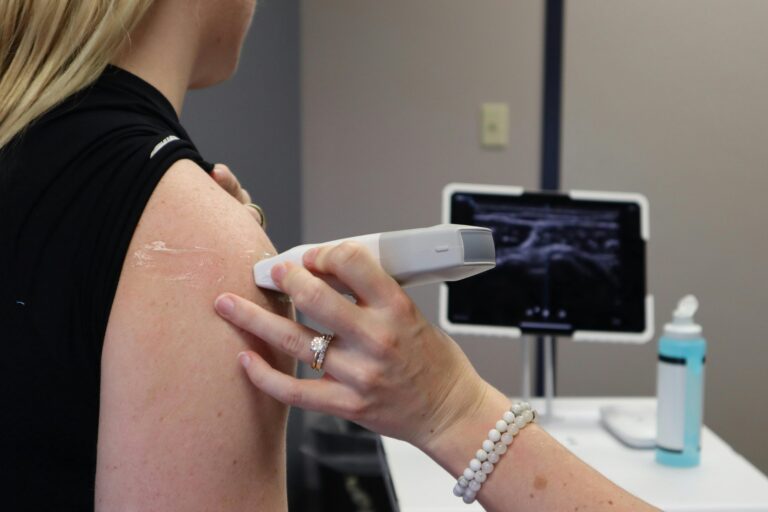
Ultrasound Therapy
Sound waves used as a delivery system — vibrating collagen-rich tissue at a frequency that stimulates cellular repair. Therapeutic ultrasound is most effective in tissues with high collagen content: tendons, ligaments, joint capsules, and scar tissue. It is not effective on muscle tissue or bone — and at MoveSync it is used precisely where the evidence supports it, not applied generically.
Used for:
- Tendinopathy — supporting tissue-level repair alongside loading programmes
- Scar tissue and adhesions — reducing restriction in collagen-dense tissue
- Ligament healing — supporting repair in the early and mid-recovery phases
- Chronic soft tissue restriction — where fascial and tendon tissue has become fibrosed
Electrotherapy — TENS, IFT, EMS
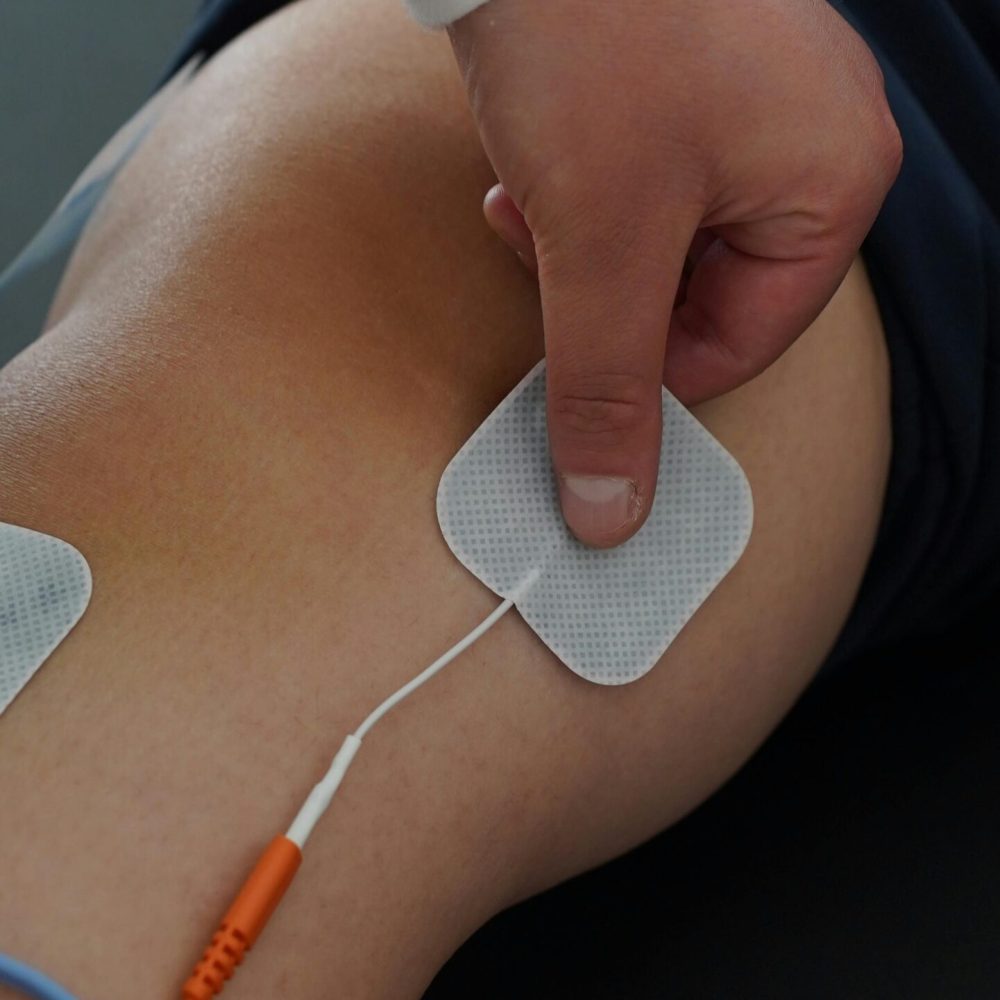
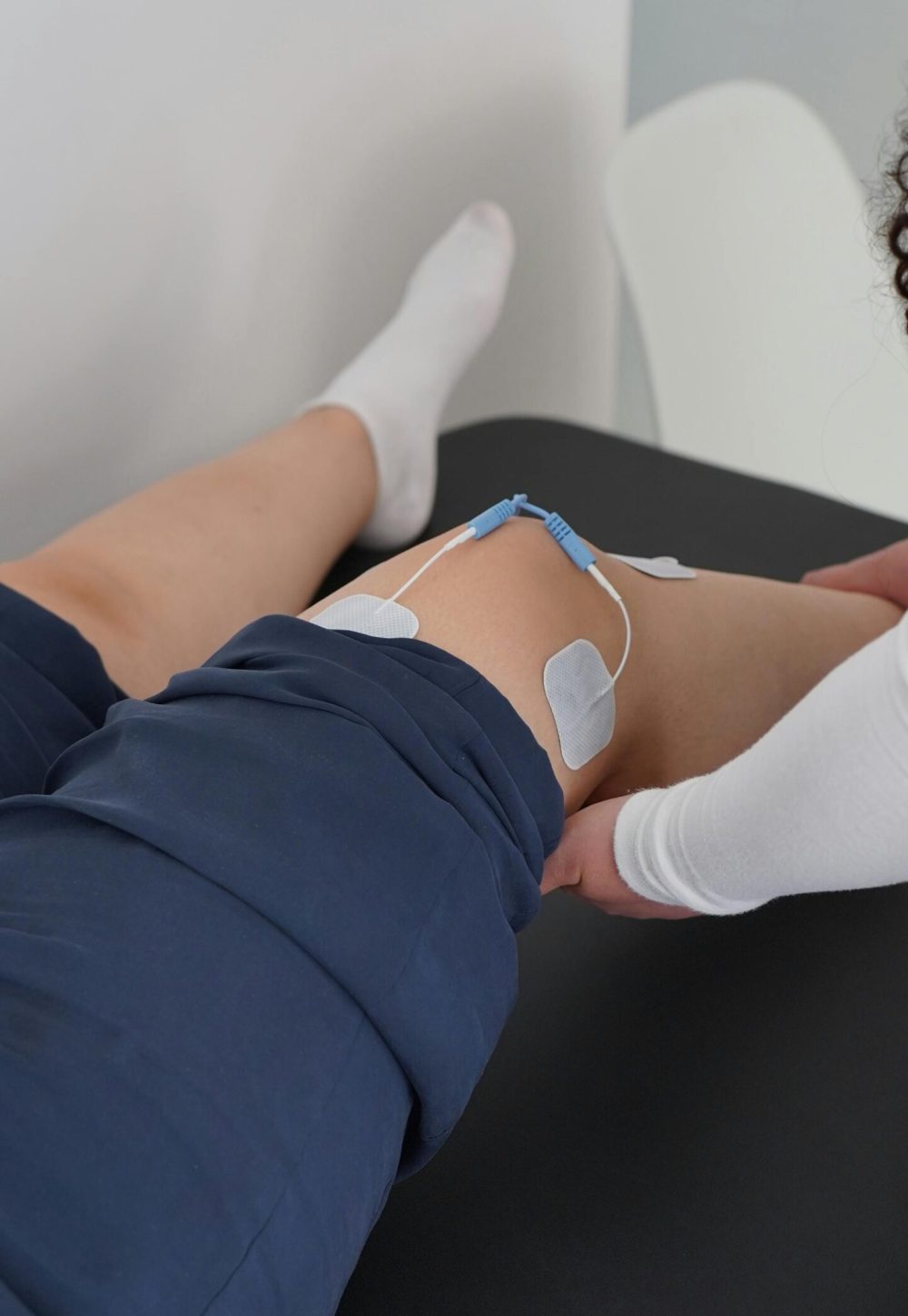
Surface electrotherapy — TENS, IFT, and EMS — is used at MoveSync for specific, time-limited purposes rather than as a default treatment.
TENS and IFT provide short-term pain relief by modulating pain signals — most useful in the early stages of an acute injury or post-surgical recovery where pain is limiting the ability to begin movement and exercise. EMS provides electrical stimulation for muscle activation — used selectively for post-surgical muscle inhibition where voluntary activation has not returned despite correct exercise cues.
These modalities work best as a bridge — reducing pain or activating muscle enough to allow the more structural and functional work to begin. They are not used as the primary intervention.
Used for:
- Acute pain management — reducing pain in the early stages to allow movement and rehab to begin
- Post-surgical muscle activation — EMS for quadriceps, shoulder, or core activation after surgery
- Pain relief during early rehab — supporting tolerance to movement and exercise in the acute phase
IPC — Intermittent Pneumatic Compression
IPC uses controlled air pressure applied sequentially to the limb — mimicking the pumping action of muscle contraction to move fluid through the lymphatic and venous system. The compression cycles rhythmically, driving fluid from the periphery back toward the trunk and supporting the body’s natural circulation and drainage mechanisms.
At MoveSync, IPC is used across four distinct patient groups:
Post-Surgical Swelling and Oedema
After knee, shoulder, ankle, or abdominal surgery, swelling limits movement and delays rehabilitation. IPC reduces oedema faster than rest alone — allowing the rehabilitation programme to progress sooner.
Lymphoedema and Cancer Rehabilitation
For patients managing lymphoedema following cancer treatment — particularly head, neck, or breast cancer where lymph nodes have been removed or irradiated — IPC supports lymphatic drainage and reduces the chronic swelling that affects daily function and comfort. This is a specialist use of IPC with strong clinical evidence and international guideline support.
Varicose Vein and Venous Insufficiency Management
For patients with varicose veins, chronic venous insufficiency, or lower limb heaviness and aching — IPC improves venous return and reduces the pooling of blood in the lower limb. It does not remove varicose veins but reduces the symptoms and slows progression when used regularly.
Sports Recovery
For athletes managing in-season training loads, IPC reduces perceived muscle soreness and supports recovery between sessions. The evidence shows consistent benefit for soreness reduction — helping athletes feel better between training blocks and maintain training quality across a full season.
If you are managing lymphoedema, venous insufficiency, or require post-cancer rehabilitation and would like to understand how IPC can support your recovery — please WhatsApp or call us to discuss.
What to Expect
Physical modality sessions at MoveSync are comfortable and non-invasive — with the exception of PENS which uses a fine needle, explained fully before treatment.
- PEMF and Laser: Little to no sensation. Some patients feel mild warmth or a gentle pulsing. Sessions run 10–20 minutes.
- Ultrasound: Gentle warmth in the treated area. Comfortable throughout.
- TENS and IFT: Light tingling sensation. Adjustable to your comfort.
- PENS: Fine needle placed precisely at the target tissue. Microcurrent produces a mild sensation — significantly more comfortable than milliampere-level systems. Most patients find it well-tolerated, including those who are cautious about needles.
- IPC: Sequential squeezing pressure on the limb — most patients find it deeply comfortable and often relaxing.
- Safety and Screening: All modalities are explained before application. Contraindications — including implanted devices, active cancer over the treatment area, pregnancy, and broken skin — are screened for at your assessment.
Conditions Where Physical Modalities Are Commonly Used
Frequently Asked Questions
Will I feel anything during these treatments?
How long does a modality session take?
Are there conditions where these should not be used?
Take the Next Step
If you want to understand whether any of these modalities are appropriate for your condition — or if you are managing lymphoedema, venous insufficiency, or post-cancer recovery and want to explore how IPC can help — an assessment will give you a clear picture.